


/mobile-640-x-360/shopper---content-banner-mobile-(640x360).jpg?sfvrsn=21b96bd0_0)

Grocery shopping can seem complicated when you’re looking to balance several priorities like health, price and responsible choices, but choosing sustainable seafood doesn’t have to be.
MSC’s 2024 Globescan Consumer Insights research shows that people want to make responsible choices, but price, health and safety remain top priority. While weighing options based on these variables, the MSC blue fish label on seafood offers shoppers a clear, consistent and widely available shortcut to making a sustainable choice no matter the price point or brand.
Why is sustainable seafood important?
The international ocean advocacy organization, Oceana reports “Carbon emissions associated with wild seafood are six times lower than that of beef, five times lower than that of mutton, and more than two times lower than that of cheese.” Sustainable fishing helps keep fish populations healthy so they can reproduce, meaning future generations can continue to eat seafood. Plus, fishing sustainably protects ocean ecosystems and biodiversity. Healthy oceans support more than just the fish we eat — it regulates climate, supplies oxygen, and maintains biodiversity.
What does the MSC label mean?
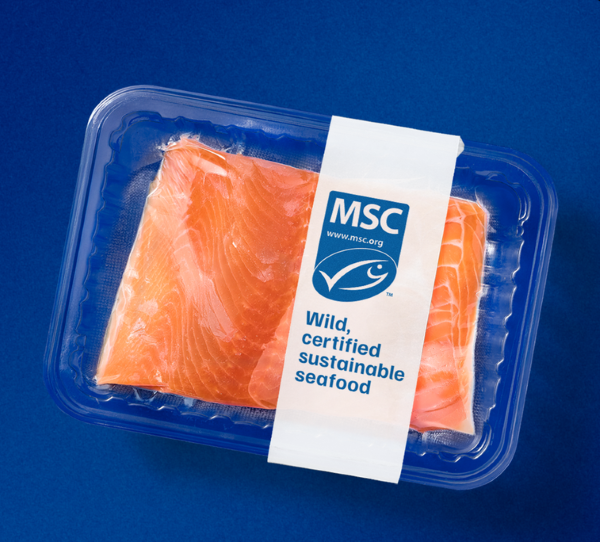
When you see the MSC label, it means the fish is wild-caught and has met rigorous sustainability criteria to protect this essential source of protein and the ecosystems it comes from.
Accessible: You can easily find the MSC label on canned, frozen, and at select fresh fish counters at any price point.
Trusted: The MSC is a nonprofit organization focused on keeping oceans healthy for the future. Every company that handles MSC-certified seafood—from the fisher to the grocery store—gets audited by independent experts. This creates a high level of accountability.
World-class Standards: Fisheries all over the world are evaluated on sustainable fish stocks, low environmental impact, and responsible management.
What is the difference between an environmental Certification and a recommendation label?
An environmental certification label like the MSC is the highest level of assurance that the product meets the environmental claims attached to it. It signals that fisheries and supply chain companies have been rigorously and independently assessed and demonstrated a credible level of performance against a set of Standards. A recommendation label (sometimes called a “buying guide” label) suggests what a consumer should choose, but it does not mean the product or fishery were independently or consistently audited against a widely recognized Standard.
The MSC label is a Certification, meaning each fishery has been independently assessed and certified as environmentally sustainable according to MSC’s Fisheries Standards. Seeing the MSc blue fish label is verification that the seafood came from a well-managed, sustainable fishery.
What is the difference between sustainable wild-caught and farmed seafood?
Wild-caught seafood comes from fish harvested in their natural ocean or freshwater habitats. So, the importance of MSC certified sustainable means there is an environmental focus on protecting wild fish populations and ocean ecosystems.
Farmed seafood is raised in controlled environments like ocean pens, tanks, or ponds. So, this is where responsible farming becomes significant and can be certified to the Aquaculture Stewardship Council (ASC) Standard.
