As ocean temperatures rise, fast-moving species are crossing borders and the world’s fishing rules may not keep up.
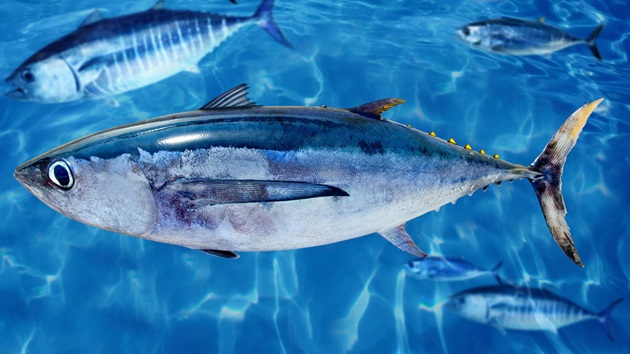
Tuna species that make up a US $40 billion industry globally, are heading for cooler waters and governments may soon be fighting over who gets to catch them.
A new global analysis has found that fisheries chasing migratory species such as tuna, bonito and billfish are among the most vulnerable to climate change, as shifting ocean temperatures push fish into new territories and disrupt long-standing international agreements.
The research, published in Cell Reports Sustainability was led by the Marine Stewardship Council (MSC), an international non-profit that sets the world’s leading standard for sustainable fishing and operates a certification ‘blue fish tick’ label for seafood. Along with academics from the Universities of Queensland, New South Wales and Tasmania, CSIRO and Griffith University, it examined more than 500 MSC certified fisheries around the world to assess how climate change could affect future sustainability, using data on 19 major seafood groups from krill to lobsters and from whitefish to tuna.
Winners and losers in a warming ocean
While the study found that fisheries targeting highly migratory species, like tuna face the greatest risk also vulnerable were small pelagic fisheries catching mackerel, herring, and blue whiting, followed by whitefish such as hoki, haddock and plaice.
In contrast, shellfish and crustacean fisheries, including crab and prawns, were less exposed because they live close to the seabed and do not migrate. The researchers noted however that these species may suffer from climate driven impacts not included in the scope of the study, such as ocean acidification and marine heatwaves.
As oceans warm, fish are on the move. In the Pacific, scientists are seeing tuna shift eastwards towards cooler zones. Such changes are altering access to one of the world’s most valuable seafoods and challenging the rules that govern international catches.
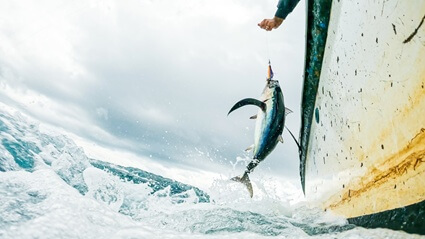
The trend is being watched closely by tuna fisheries in Australia and New Zealand, where albacore and southern bluefin tuna are key export species. Shifts in migratory patterns could influence future quotas and management across the Tasman.
“When fish move, the paperwork doesn’t follow,” said Lauren Koerner, the study’s lead author, and Data Science Manager at the MSC. “We’re seeing fisheries adapt to remain sustainable, but as fish cross into new jurisdictions, existing quota agreements quickly become obsolete. Without flexible management, the risk of overfishing grows.”
A new test for international cooperation
Tuna fishing is managed through regional fisheries management organisations that set catch limits and distribute quotas among member countries. But those allocations are often based on historic catches, not on where the fish are now found. As species shift, countries that lose fish stocks may resist giving up quotas, while those gaining fish may demand a greater share.
The study warns that these tensions could intensify, particularly across the Western Central Pacific where small island developing states rely heavily on tuna fishing worth US $4.9 billion.
“With climate change there will be winners and losers in tuna fisheries,” said Joe Zelasney, manager of the Common Oceans Tuna Project, which supported the research alongside the UN Food and Agriculture Organisation. “For some developing small island states, the impact on their economies could be devastating. It’s crucial that governments and regional organisations work together now to safeguard livelihoods and food security.”
The politics of a moving ocean
Scientists call for “adaptive allocations,” where fishing quotas adjust as fish distributions shift. But such reforms require rare cooperation. Disagreements over mackerel quotas in the North Atlantic, often dubbed the “mackerel wars,” have already shown how fragile these deals can be.
The MSC’s analysis suggests that even well-managed fisheries face mounting pressure as fish move beyond national boundaries. While MSC certified fisheries are generally better equipped to respond thanks to robust management plans and sustainability audits, the report cautions that those outside certification are likely to be far more exposed.
“Climate change shows no sign of slowing, and global demand for seafood keeps rising,” said Koerner. “Governments and fisheries management organisations need to move faster than the fish. If they don’t adapt their practices, we risk losing both ocean health and food security.”
From global to local choices
The research was supported by the Ocean Stewardship Fund, made up of 5% of annual royalties from purchases of seafood with the MSC blue fish tick label, widely found on seafood products such as canned tuna in supermarkets.
The call for urgent international cooperation comes ahead of COP30, the UN climate negotiations scheduled for 10-21 November, to ensure fishery management evolves alongside a changing ocean.
“Climate change is redrawing the map of the sea,” said Koerner. “If we want sustainable tuna for future generations, we must redraw our management boundaries too.”