



If grocery shopping has felt more complicated lately, you’re not alone.
New research conducted for the MSC by Léger* shows that for Canadians, affordability is playing a major role in food choices, including fish and seafood. Seven in ten Canadians (72%) say the cost of groceries limits their ability to make environmentally friendly choices, and 60% say rising prices have reduced how often they purchase fish and seafood.
At first glance, that might sound discouraging. But the full picture is more nuanced, and more hopeful.
Canadians Haven’t Given Up on Seafood or Sustainability
Despite cost pressures, seafood remains a staple for many households. Over two-thirds of Canadians (68%) report buying fish or seafood in the past two months. And among those who do, there’s still a strong desire to make responsible choices:
62% say they feel conflicted about choosing affordability over sustainability
77% rely on sales and promotions to afford healthier options like fish and seafood
36% adjust spending on other grocery items so they can still afford fish and seafood
This isn’t a story of people always turning away from seafood or sustainability—it’s a story of people trying to hold onto it, even when budgets are tight.
Younger Canadians Feel the Pressure Most
The study also reveals important generational differences - different strategies and constraints across life stages.
Millennials and Gen Z are more likely than older generations to say that affordability limits their ability to make environmentally friendly food choices (reaching as high as 78%) and that rising grocery prices have reduced how often they buy fish and seafood.
At the same time, they also feel more conflicted about the trade-off between cost and sustainability, and younger consumers are among the most adaptive - more likely to adjust spending in other areas of their grocery budget to continue purchasing fish and seafood. This suggests a strong underlying desire to choose more planet-friendly fish and seafood, even when finances are tight.
Gen X and Baby Boomers, by comparison, report slightly less financial pressure on sustainable choices and are less likely to make these kinds of trade-offs.
Affordability and Sustainability Can Coexist
While sustainability can be perceived as coming at a price premium, in seafood it doesn’t have to be out of reach.
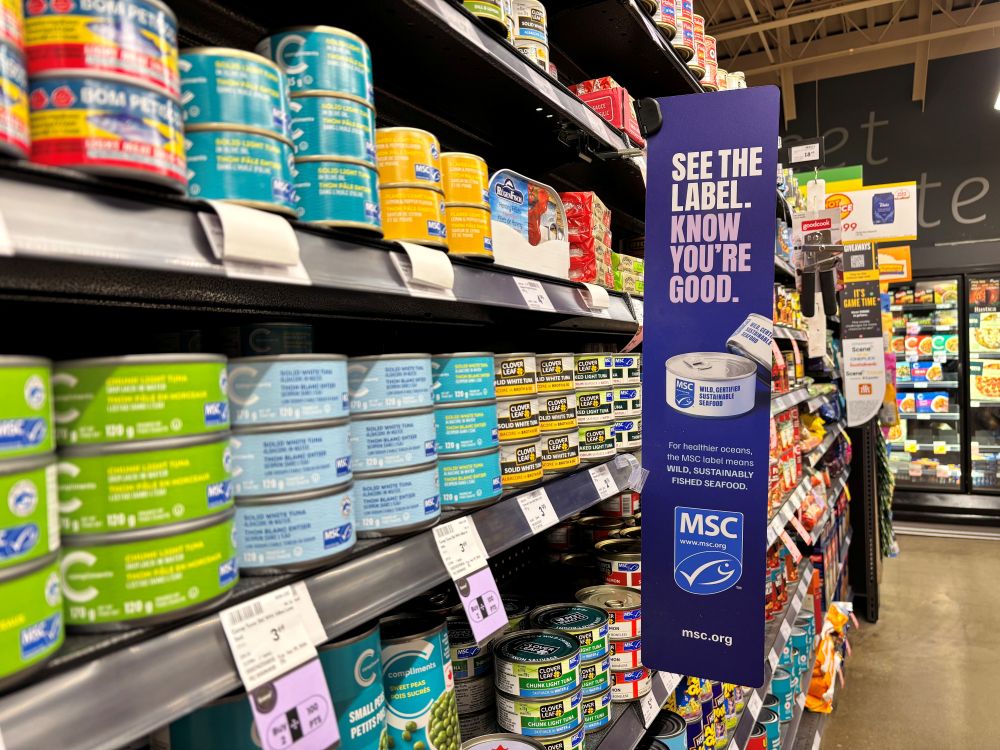
More than other animal proteins, fish and seafood are available in a wider range of formats, species, and prices. While fresh fish often receives the most attention, there are many more affordable options that carry the MSC blue fish label for environmental sustainability:
Canned seafood, such as tuna, salmon, and sardines, offers strong value and convenience
Frozen seafood provides quality and nutrition with a longer shelf life and less waste
Many Canadian retailers offer private label seafood products - like Walmart’s Great Value, Loblaws President’s Choice and Sobey’s Compliments - that meet the MSC’s sustainability standards, helping make certified options available at often lower prices.
In other words, choosing sustainable seafood isn’t just about what you buy, it’s also about how you shop.
5 Tips for Buying Sustainable Seafood on a Budget
If you’re looking to balance cost and sustainability, here are a few simple strategies that can make a real difference:
1. Shop smart with product types
Don’t overlook MSC certified canned and frozen options. They’re often more affordable, last longer, and are just as nutritious as fresh.
2. Look out for sales
With 69% of Canadians already relying on promotions, watching for sales is a practical and effective way to make sustainable choices more accessible. Buying canned and frozen also allows you to stock up when sales are good.
3. Choose trusted labels across price points
MSC certified seafood is available in a wide range of products, including many every day, budget-friendly items like canned tuna, frozen filets or surimi (imitation crab).
4. Explore private label options
Many grocery retailers offer their own private label seafood products that meet the MSC’s trusted sustainability standards often at a lower price.
5. Try something new!
Trying different types of fish or seafood products can help you find options that fit both your taste and your budget.
A More Realistic (and Optimistic) Outlook
It’s true that affordability is shaping food choices in Canada right now. But it’s also clear that Canadians haven’t lost sight of what matters to them.
People are adapting. They’re looking for value. They’re making trade-offs—but they’re also finding ways to stay aligned with their values wherever possible.
Sustainable seafood doesn’t have to be out of reach. With the right information and a flexible approach, it can still be part of everyday shopping—at a price that works.
*Methodology:
Online survey conducted by Leger of 1535 Canadians aged 18+ between April 10 and April 12, 2026. For comparison purposes, a probability sample of n=1605 yields a margin of error of no greater than +2.4% (19 times out of 20)