
Certification labels on food help shoppers by providing trustworthy information about different standards. Labels can cover environmental, ingredient, and/or social standards. Recent MSC research conducted with Globescan revealed that shoppers want sustainability claims to be clearly labeled and verified by independent organizations. This is where certification labels come in.
From protecting ocean ecosystems, supporting farming communities, and promoting transparency in food production, these labels are designed to empower shoppers. Credible labels can help you make choices that meet your needs and align with your values.
Marine Stewardship Council (MSC)
What to look for:
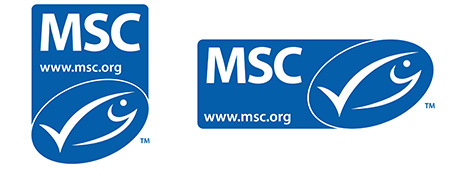
The blue MSC ecolabel with a white fish and checkmark on seafood packaging.
What it means:
The MSC ecolabel means that the seafood was wild-caught and comes from a fishery that was independently assessed against strict standards for sustainable fishing. These standards evaluate:
-the health of fish populations,
-the impact of fishing on marine ecosystems,
-and how well the fishery is managed.
The MSC works with scientists, fisheries, industry, and NGOs around the world to help protect that wild fish populations. The ecolabel helps consumers quickly spot seafood that supports environmentally sustainable fishing practices.
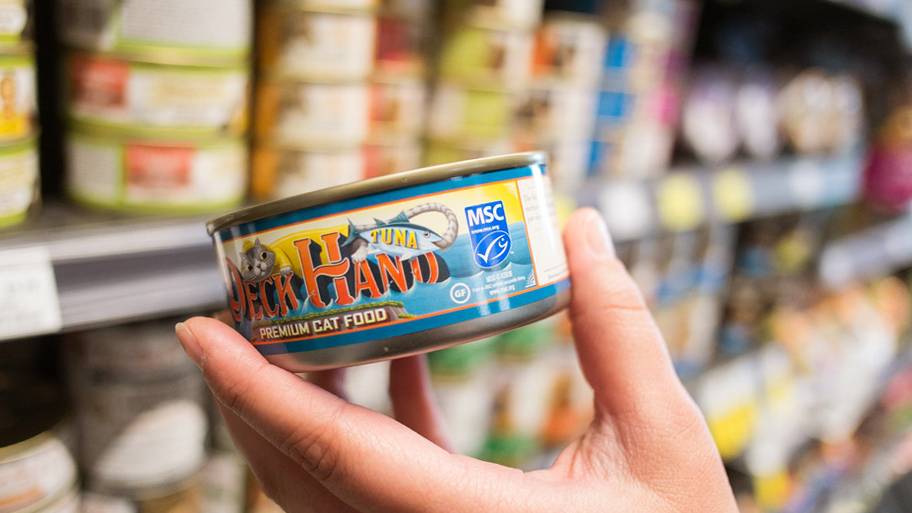
The impact is visible in everyday seafood products like canned tuna. Canadian companies sold more than 93.5 million cans of MSC certified tuna in 2023–24. This shows the rapid growth in demand for verified sustainable seafood.
You can find the label on much more than canned tuna. It can be found on all kinds of canned seafood, frozen products, fresh fish, and even pet food and supplements.
What to look for:
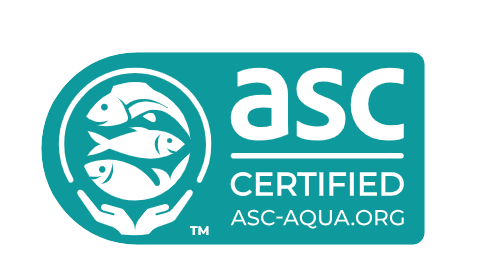
Look for the turquoise ASC ecolabel featuring three fish inside a circle with open hands underneath on farmed seafood packaging.
What it means:
The ASC label identifies seafood from farms that have been independently certified to the ASC standard for responsible farming.
The ASC ecolabel can only be found on products coming from aquaculture operations that
-minimize their impact on surrounding ecosystems
-maintain water quality,
-and protect biodiversity.
ASC also addresses social issues, including safer working conditions and fairer treatment.
Farmed seafood products such as salmon, shrimp, tilapia, mussels, and much more may carry the ASC label.
What to look for:
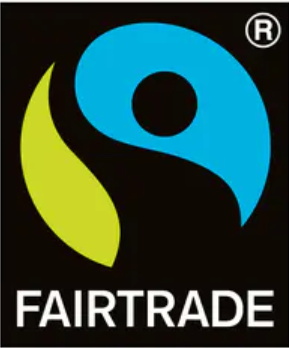
The Fairtrade Mark, a blue and green symbol with a stylized human raising their arm.
What it means:
Fairtrade certification is an ethical label aimed at improving the livelihoods of farmers and workers. Products with the label meet standards that ensure:
-fairer wages,
-safer working conditions,
-and better opportunities for farming communities.
Fairtrade Standards also promote environmentally sustainable farming to help farmers address climate change.
Common Fairtrade products include coffee, chocolate, bananas, sugar, and tea.
What it means:
Rainforest Alliance certification has two main pillars. The first is to support agriculture and forestry practices that protect ecosystems and wildlife. The second is to do so while supporting farmers and workers.
Products with this label come from farms or forests that meet standards related to:
-biodiversity conservation,
-responsible land management,
-and improved livelihoods for local communities.
The program aims to protect forests, reduce deforestation, and encourage sustainable farming methods.
You’ll often see the Rainforest Alliance label on coffee, tea, chocolate, and tropical fruit.
Non-GMO 
What to look for:
The Non-GMO Project label is a monarch butterfly landing on a green check mark.
What it means:
The Non-GMO label verifies that a product has no ingredients from genetically modified organisms (GMOs).
This certification focuses on transparency and consumer choice. It helps shoppers identify products that have been produced without genetic engineering. It is most common on packaged foods with ingredients like corn, soy, or canola, which are commonly genetically modified crops.
Why Food Labels Matter
Every purchase sends a signal. By choosing products with trusted certification labels, consumers can help support healthier ecosystems, stronger communities, and a more sustainable food system.