Are shrimps and prawns the same thing? Shrimp and prawns are very similar so the terms are often used interchangeably, but there are differences in anatomy, habitat, and biological classification. Depending on where you live, you might be more familiar with shrimp or prawns. If you live in Australia, New Zealand, or the UK, you probably call them “prawns”. But if you’re in Canada or the US, you likely use “shrimp”.
For the average seafood eater, it’s a little more difficult to tell the difference as they have similar flavors and textures and can usually be substituted for one another.
The short answer: No, shrimp and prawns are not the same.
Shrimp and prawns are actually different types of crustaceans. They have different gills, claws, body structures, and flexibility. These are important details for scientific accuracy.
At the simplest level, prawns are generally larger than shrimp (but not always!) and they have straighter bodies. To confuse things further, sometimes shrimp are called prawns, like spot prawns, which are in fact a type of shrimp.
What are shrimp?
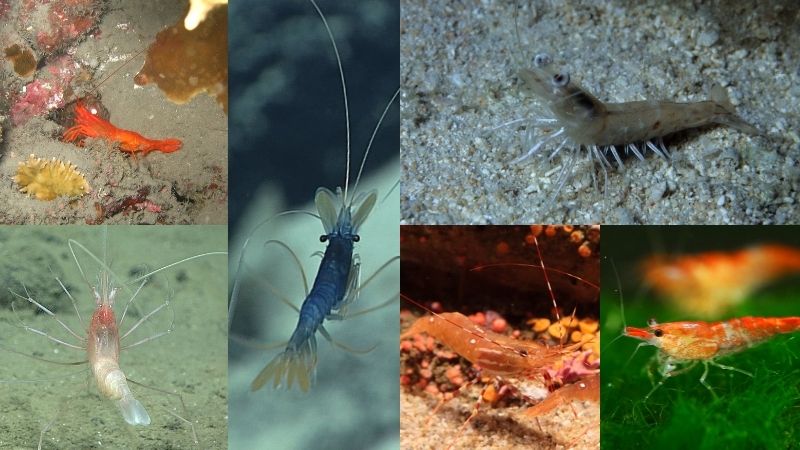
Scientifically, shrimp are decapod crustaceans – meaning they have ten legs and segmented bodies covered in a hard exoskeleton.
Nearly 75% of shrimp live in saltwater. In the US, most wild-caught shrimp come from Southeast, from Texas to North Carolina. But shrimp can thrive in a variety of water temperatures, and there are shrimp fisheries in the US Northwest, and off Canada’s east coast. In general, the colder the water, the smaller the shrimp.
Shrimp are wildly popular with seafood eaters in North America. In Canada and the US, shrimp consistently land in the top three of the most commonly eaten seafoods.
What are prawns?
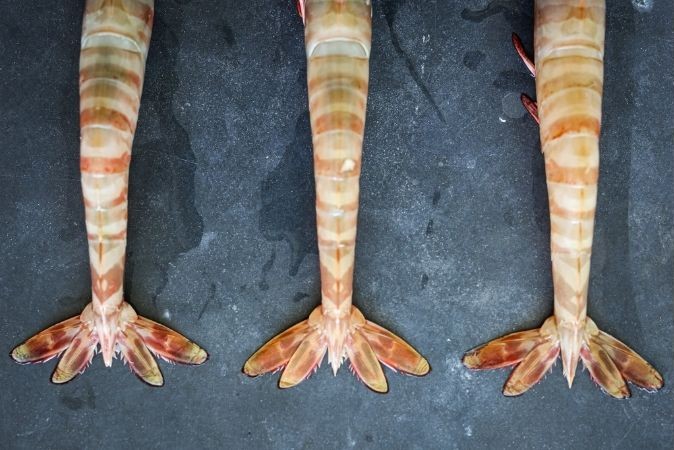
Prawns are often described as “bigger shrimp” but there’s more to it than that. Like shrimp, prawns are ten-legged crustaceans, but their body segments overlap, making them less flexible and straighter than shrimp. Their claw-like legs are also generally longer than shrimp legs.
While prawns can live in saltwater, the majority of prawns are found in freshwater, and they tend to prefer warmer water.
In the culinary world, however, they are almost interchangeable.
Can you use prawns in a shrimp recipe?
Shrimp and prawns can be easily swapped for each other in recipes. They share a mild, slightly sweet flavor and have similar textures. The only thing that will change if you swap prawns for shrimp (or the other way around!) is the cooking time. Since shrimp are usually smaller, they’ll cook quicker than most prawns.
Are prawns healthier than shrimp?
Both prawns and shrimp are good sources of protein, with about 18-20 grams in a 3-ounce serving of cooked meat. They are also both low in saturated fats and high important vitamins and nutrients like B12, iodine, and selenium.
Some seafood lovers are weary of shrimp because of their cholesterol content. While it is higher than many other seafood species, most health experts agree that shrimp's low saturated fat content and high nutritional profile make it a healthy choice in moderation.
A few important FASQs (Frequently Asked Shrimp Questions)
1. Are shrimp bugs?
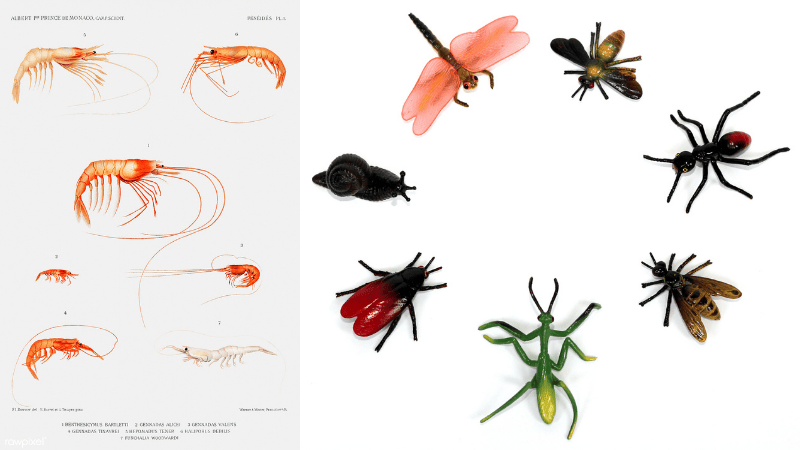
With exoskeletons, compound eyes, and multiple pairs of jointed legs, bugs and shrimp do share a lot of characteristics. But technically speaking, shrimp are not bugs.
In fact, bugs are shrimp.
A recent study reevaluated how insects are classified in the tree of life, and scientists now agree that they belong in the same category as shrimp and crabs. We know now that insects’ ancient relatives lived in the sea, making insects the shrimp of the land.
2. Are shrimp fish?
Fish is an incredibly broad category of creatures. At its simplest, fish are vertebrates (meaning they have a backbone) with gills and fins, and they live underwater. Shrimp and prawns also live underwater and have gills but they are not fish. They are crustaceans, which are invertebrates, meaning they do not have a backbone.
3. Are shrimp radioactive?
Thankfully, this is becoming a less-frequently asked question, but it’s asked just enough that we wanted to set the record straight. Shrimp are not naturally radioactive. This concern hit public awareness in August of 2025 when the US FDA issued a warning to avoid certain frozen shrimp products because they may have been contaminated with Cesium-137, which is a radioactive isotope. The issue was limited to shrimp from a specific processing plant, and no products that were contaminated actually entered the US market. There have been no additional recalls since September 2025, so you should feel confident that your shrimp is not radioactive.