Sometimes you need an easy lunch or dinner, but you also need to hit your protein target, feed your kids, stick to your budget, and not spend all day in the kitchen.
Enter: fish sticks.
They are delicious, come in a delightful variety of shapes and sizes, and often come from certified sustainable fisheries. So, whether you are elevating your bagged salad by adding a sustainable protein to hit your protein and nutrient goals, attempting to recreate your favorite restaurant’s fish sandwich, or just need something quick you can throw in the air fryer and have dinner in ready in 10 minutes, frozen fish sticks can be the answer.
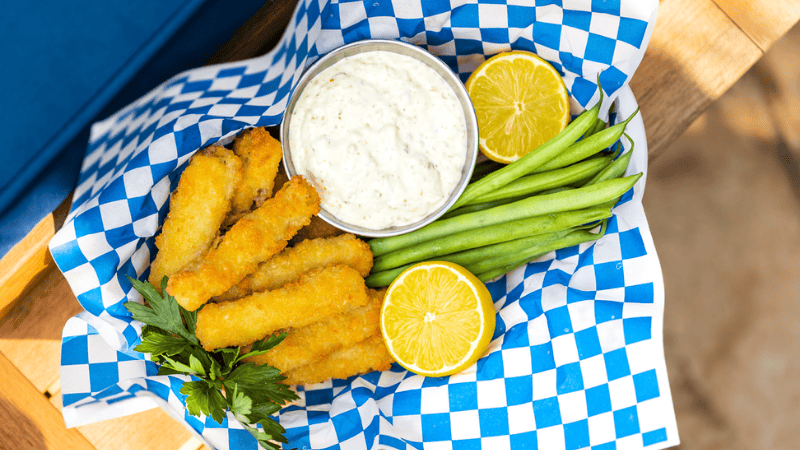
What are fish sticks made of?
That depends! Most breaded/battered fish sticks are made from whitefish.
Whitefish is an umbrella term that includes a bunch of species with similar flavor profiles. It includes fish like pollock, cod, hake, haddock, and more.
How do I know my fish sticks are sustainable?
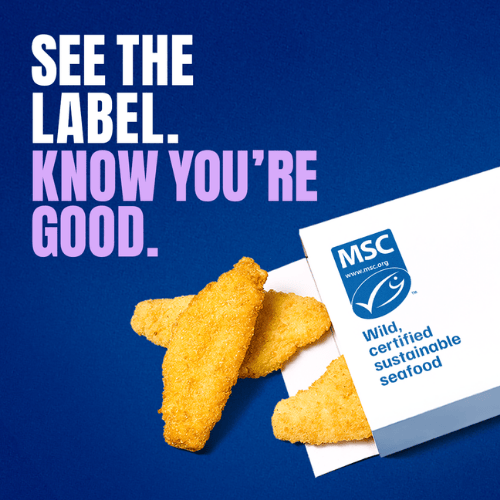
This is an easy one – a ton of breaded fillets in the freezer section carry the MSC blue fish label on the front of the packaging, which is your sign that the seafood came from a certified environmentally sustainable fishery. When you see the MSC blue fish label, it means that the seafood inside that box came from a fishery that:
- is fishing only from healthy populations and leaving enough fish to continue reproducing
- is working to reduce its impact on the surrounding environment
- has effective management in place to respond to any changes in the fish population or the ecosystem
There are a ton (actually six million metric tons – that’s the weight of 16,600 Boeing 747s) of MSC certified whitefish from around the world in the MSC program and that number continues to grow. Our most recent data (March 2024) shows that 78% of the world’s whitefish catch is MSC certified – and 35% of that comes from the US! Of that portion, the majority comes from the icy cold waters of Alaska.
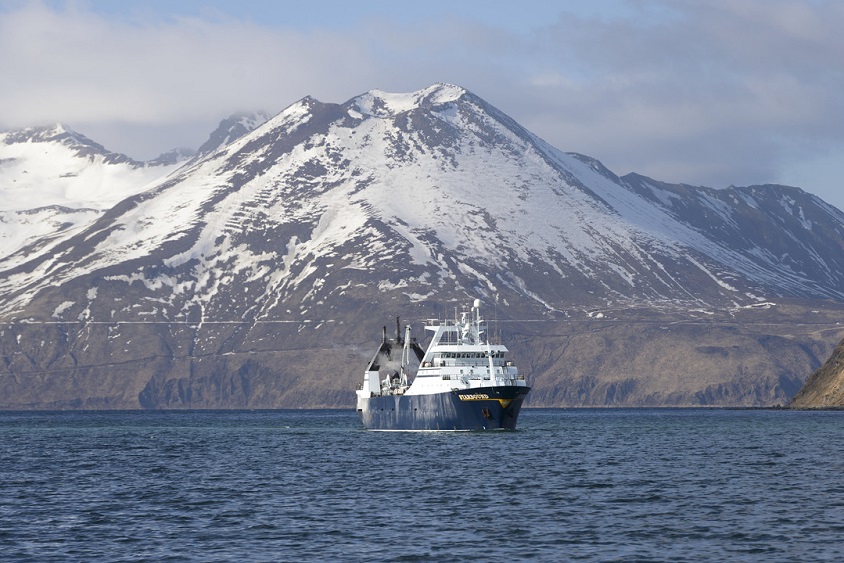
There are some incredible stories of whitefish fisheries around the world, like the Alaska pollock fishery which is the largest fishery in the US and the one of our longest partners. They achieved MSC certification back in 2005 and were just recertified for the fourth time!
There is also the Namibian hake trawl and longline fishery, which became the first in the country, and only the second in Africa, to meet the MSC’s Standard for sustainability. It was recertified in early 2026. The fishers and managers are working hard to continue reducing interactions with marine mammals and have been using new technology to deter seals from trying to snag a free meal. Watch a little bit of their story here.
And then there’s the Scottish Fisheries Sustainability Accreditation Group, which is managing whitefish populations in the Northeast Atlantic while protecting habitats and embracing new technology. This new tech is empowering fishers to reduce the impacts of fishing by more closely monitoring their catch and being able to quickly share information with other vessels. Read more about their successes here.
See the label on your fish sticks, know you’re good
More than 60% of whitefish products carrying the MSC label are frozen, which means it’s pretty easy to find sustainable and delicious seafood in the freezer aisle.
There is a huge variety of breaded/battered frozen whitefish that we love, like:
- Guinness® Battered Fish Strips made from wild Alaska pollock
- Shark bites made from wild Alaska pollock
- Ian’s Free-From Fish Sticks that are made without common allergens like gluten and soy
- Beer battered cod with gluten-free breading
- Fremont beer battered cod
- Macadamia nut crusted flounder from Aldi
So, when you see the MSC blue fish label, you know you’re buying seafood that supports a healthy ocean and fishers working hard to make that a reality.