Fisheries don’t stop improving once they become MSC certified. They make a long-term commitment to sustainability and to keep up with global best practice.
Why do MSC certified fisheries need improving?
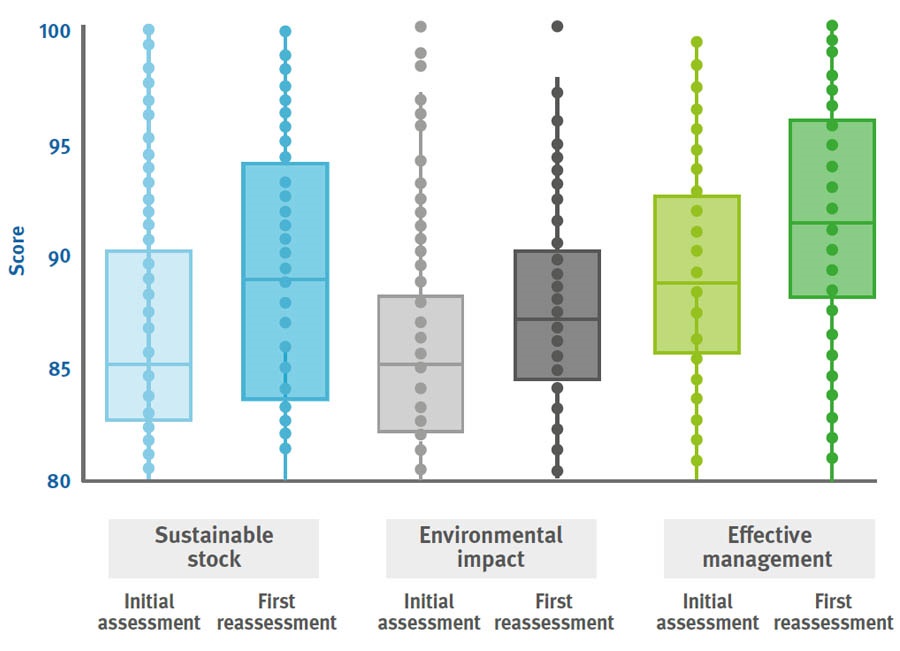
To be certified as sustainable, fisheries must score an average of at least 80 out of 100 for each of the MSC Fisheries Standard’s three principles: sustainable stocks, environmental impacts and effective management.
Fisheries improve significantly as they stay in the program.
The graph below shows the distribution of scores from all currently certified fisheries that have completed at least two full assessments against the MSC Fisheries Standard – typically, this reflects changes over five years. For all three principles there is a statistically significant improvement between the average (median) score when they join the program and at the end of the first certification period.
How does the MSC drive fisheries sustainability?
The three principles of the Fisheries Standard are scored against 25 indicators. If a certified fishery scores less than 80/100 on an individual indicator, it will be set a ‘condition of certification’ by the independent assessor. The fishery must then implement a plan of action to make improvements that will bring it up to global best practice. If conditions are not met within the certification period (usually 5 years), the fishery is suspended from the MSC program.
Over 95% of certified fisheries have successfully completed at least one condition. Conditions drive continual improvement towards global best practice in fisheries sustainability.
Progress made but pressures persist
“Despite plenty of progress, pressures on the ocean persist, making it more important than ever that we work together to manage fish stocks sustainably.
The fishery resources on which millions depend for food and livelihoods are productive, yet finite, and ensuring they are used sustainably is essential, not just for ecological reasons, but also for global food security, nutrition and economic resilience.
The priority now is to consolidate and extend this progress, ensuring that fishery resources continue to sustain ecosystems, economies and future generations.”
Manuel Barange
Deputy Director General of the United Nations Food and Agriculture Organisation
Overfishing: Oceans and livelihoods at risk
35.5%
of stocks are fished at unsustainable levels
33 million
people employed directly in the wild capture fisheries sector
7.3%
of the global population rely on fisheries for their livelihoods
3.2 billion
people get at least 20% of their daily animal protein from fish
How sustainable fishing supports healthy stocks
A key principle of sustainable fishing is ensuring there are enough fish left in the ocean to reproduce and replenish the population.
Fisheries that achieve certification to the MSC Fisheries Standard must demonstrate that fish stocks are healthy and well-managed, and adjust their catch in response to changes in the stock.
“Through coordinated science, responsible management, and collective determination, we can turn the tide on overfishing, ensuring that our fish stocks not only recover but thrive.”
Bill Holden Senior Tuna Fisheries Outreach Manager at the MSC
Sustainable fishing in numbers
213
improvements made by MSC certified fisheries benefitting stock status and harvest strategies over the last three years
738
fisheries engaged in the MSC program*
20.6%
of all wild marine catch engaged with the MSC**
**As of 2024/25
Sustainable Fishing Case Study Reports
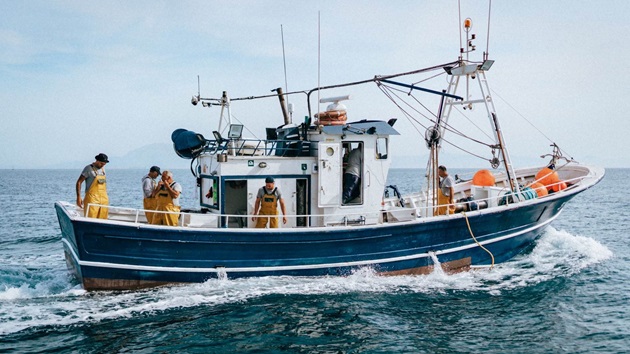
Fishing for the Future Sustainable Stocks Report 2026
Our Fishing for the Future report, launched for World Ocean Day 2026, demonstrates how well-managed, sustainable fishing practices are vital to secure fish stocks and ensure long-term resilience.

Sustainable Fishing Means More Report New Zealand 2025
An overview of the performance of MSC certified fisheries in New Zealand.

Fishing for the Future Report Australia 2024
The Fishing for the Future Report for Australia is the first of its kind and provides a detailed analysis of the positive environmental impacts made by fisheries that have chosen to be assessed against the MSC Fisheries Standard since 2000.
-500.tmb-thumb300.jpg?Status=Master&Culture=en&sfvrsn=651ac8e5_1)