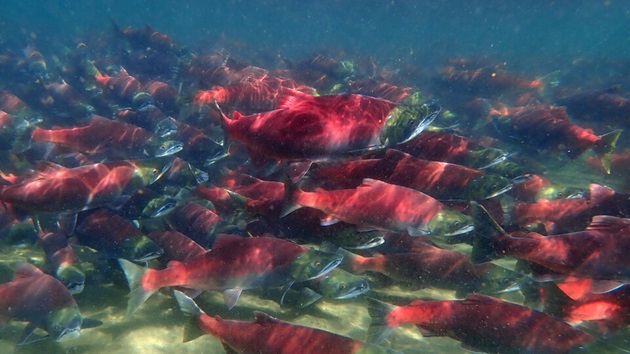
When Iberian sardine stocks dropped seriously low, the Portuguese and Spanish fishing sectors worked together to protect the livelihoods of fishers and the health of their beloved fish.
By the time the gear is loaded onto the Vitória Coentrão, it’s close to midnight when the crew sets out. The night at sea involves carefully setting the large net and hoping to gather fish in one haul.
"Purse seine fishing is one of the most beautiful fishing techniques in existence. It's like an art form when you see the movement of the school of sardines and the gear," says Francisco Santos, captain of the Vitória Coentrão.
The 82-foot vessel returns after dawn, the rising sun casting a path back to the dock. They unload and sift the catch, a mass of silvery sardines, some of which will go fresh to the local cannery. The rest head to the morning auctions, ready to shine on summer market stalls.
"What I like most is the adrenaline rush fishing gives me. And arriving back on land with the fish we need because the day went well," reflects Adriano Pinto, crew on the Vitória Coentrão.
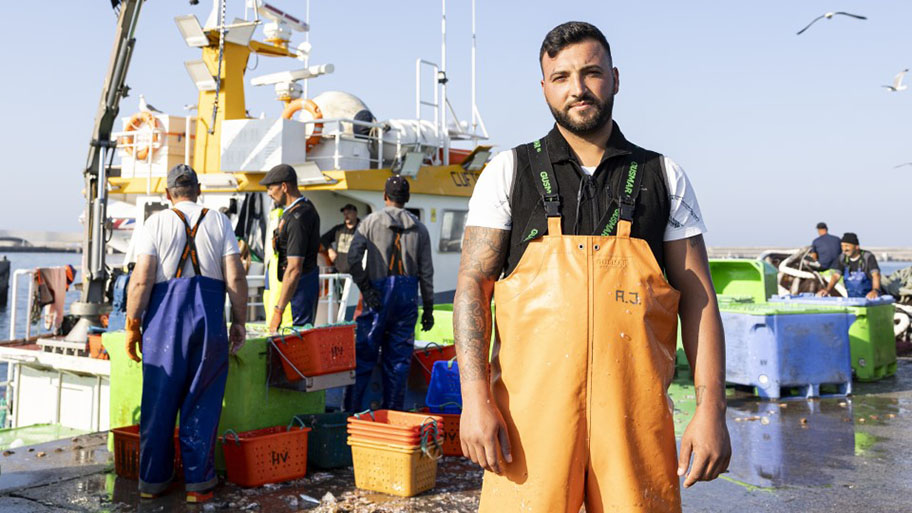 Adriano Pinto, boatswain on the Vitória Coentrão © Flymedia
Stock crash
This routine was initially disrupted 11 years ago, in the summer of 2014. The Portuguese sardine fishery had its MSC certification suspended when populations declined.
An independent surveillance report carried out as part of the fishery's MSC certification revealed that it was no longer operating at a sustainable level. Poor recruitment (the number of new fish of reproductive age joining the stock), fishing pressure, and shifting environmental conditions meant levels had been diminishing for years and were not recovering at the expected rate.
The situation went from bad to worse. By 2017 the stock was in critical condition, and the fishery was on the brink of complete closure.
A staple of the Portuguese and Spanish diet, a vital socio-economic resource, and a cultural symbol for centuries, sardines faced an uncertain future.
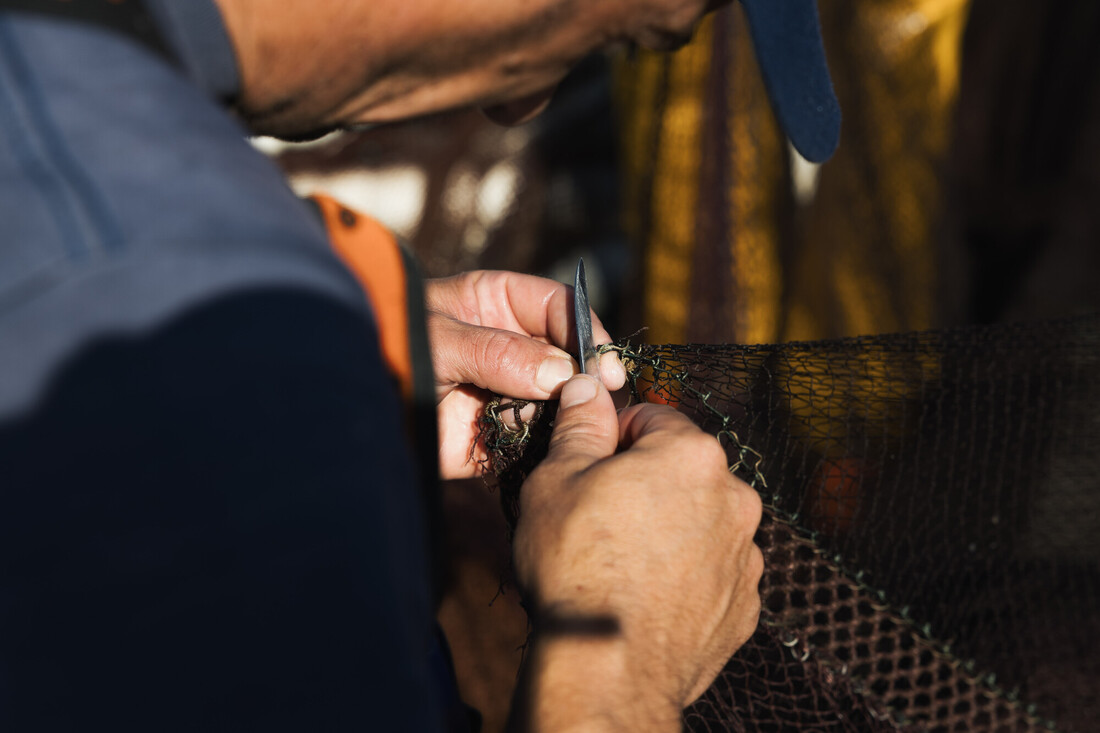 Fisher tends to net © @DavidVVisuals
Hard times
Santos came from a family of fishermen with "fishing in [their] blood". He recalls the terrible seasickness of the first night he went to sea in 1985, a harsh north wind, and the rocking boat. Like most fishermen Santos overcame the seasickness. He grew to love and respect his chosen vocation. "Working every day at sea is a privilege," he says. "The ocean is my football pitch. It’s where I feel good." But without steady work, he was struggling.
It was a desperate time for many fishers whose livelihoods depended on regular healthy catches. Many faced periods of unemployment, and others switched to less profitable species. Several processing factories had to operate at reduced capacity or close altogether.
"We went through great difficulties. Because we spent seven years working four to five months to sitting idle for the rest of the year," says Santos. "There was no extra income, no subsidies from anywhere. Companies had to tighten their belts, reducing crews, fuel, and the cost of nets. Eventually, I just couldn’t bring in any fish, so I went bankrupt."
“The situation highlighted the vulnerability of fishermen and the need for teamwork and perseverance to achieve sustainable fishing,” said Alberto Martín, MSC Program Director for Spain and Portugal.
Building trust
These were years of survival according to Humberto Jorge, President of ANOPCERCO, the National Association of Purse Seine Producers’ Organization, in Portugal. “We only operated for four or five months, with very low catch limits compared to what we were used to. But we managed to adapt and maintain this management mode without losing focus on the sustainability of the resource."
Fast forward almost a decade and the sardine stocks are in robust health. The Iberian purse seine fishery has been certified to the MSC Fisheries Standard. This requires the fishery to demonstrate tree things:
- that stocks are healthy,
- that the fishery is well-managed,
- and that environmental impacts are reduced.
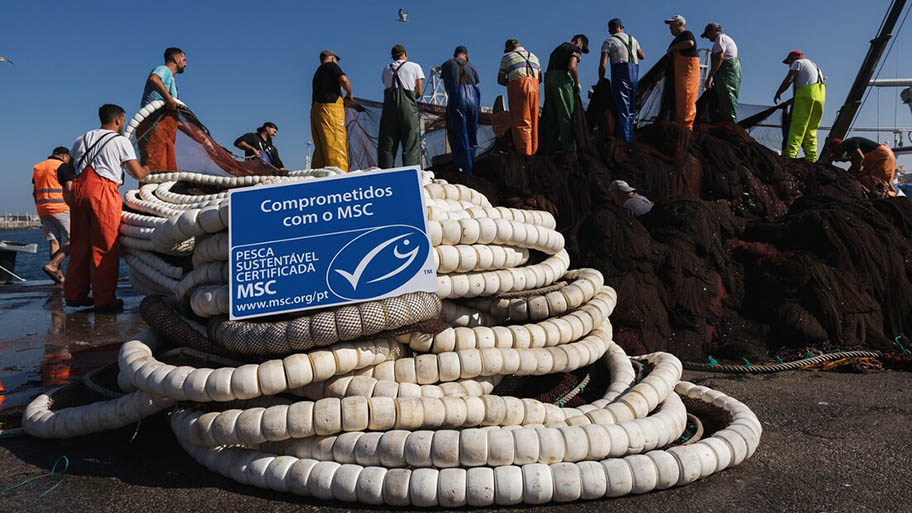 Newly certified. Fishers gather nets © @DavidVVisuals
The certificate now covers 317 vessels along the coast from the Bay of Biscay to the Strait of Gibraltar.
Fishers played a vital role in the comeback. Fleets and governments from Portugal and Spain came together to turn things around. They developed and agreed on a science-based management plan. It included several ways to ensure populations remained at sustainable levels including:
- precautionary harvest control rules,
- closed seasons,
- and annual catch limits based on the best available data.
"Nature also gave a hand, with several years of strong juvenile additions to the fishable stock," adds Alberto Martín, MSC’s Program Director for Spain and Portugal.
The crisis rekindled a new partnership between scientists and fishers in Portugal. Since 2017, research vessels have been actively involved in national biological sampling campaigns led by the Portuguese Institute for the Ocean and Atmosphere (IPMA). Their involvement has allowed for a new approach in how schools of fish are identified.
“As well as participating in these research surveys, the fishers gave us permission to have observers on board at sea. Now we can collect information about the fishing effort, the species that are caught, or interactions with top predators,” says Laura Wise, a stock assessor and data scientist at IPMA in Lisbon.
The collaboration helped build mutual trust and improve the quality of data. This helps inform a deeper understanding of fish stocks and how to manage them sustainably. It’s also shown that the fishing sector can play a key role in protecting the very resource it depends on.
"When fishermen base their catches on scientific advice - and when producers are aligned - the result is a success," says José Fernandes, Portugal’s Minister of the Sea. "It is a good example of what two countries can do, obviously with the help of the entire sector."
Canning: pride and tradition
The sector includes canneries that have long been an integral part of Portugal and Spain’s fishery landscape. Many of these struggled, too, when sardine stocks came close to collapse in the middle of the last decade. But today new factories for canned seafood are being built in Portugal and Spain.
Canning is a historic trade with a modern outlook. Sardines are passed through a brine solution. Then the head and guts are removed, and the tail is trimmed by a team of expert women wielding razor-sharp scissors. It’s skilled, repetitive, and precise work – a core part of traditional sardine canning that machines still can’t fully replace.
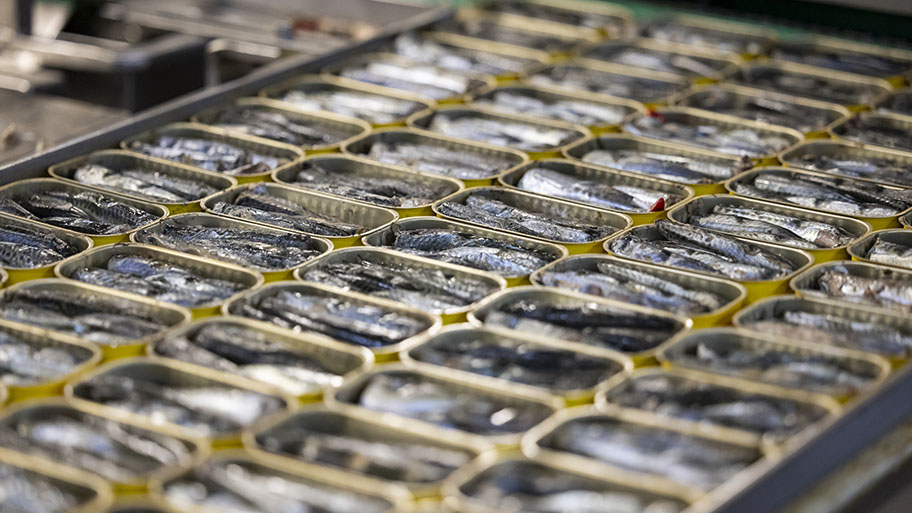 Freshly canned sardines at Conservas Portugal Norte © Flymedia
"It’s a company rooted in pride and tradition but keen to secure its future by investing in long-term sustainability," says Cláudio Ribeiro, commercial manager of the cannery Conservas Portugal Norte.
In the past decade, a new focus on quality, ethical sourcing, and vintage design has enhanced the appeal of tinned fish. "Being a certified Portuguese sardine means combining tradition, culture, and art with a commitment to traceability, which is what the MSC symbol gives us," adds Dr Freitas.
“Sardines have a tight relationship with Portugal; they are part of our culture and our life. There is no Portuguese home that does not have sardines during the summer. And there is practically no Portuguese person who does not eat sardines during the year,” said Dr José Freitas, President of the National Association of Canned Fish Industries (ANICP).
Sustainable value
Many stakeholders say that MSC certification has played a central part in putting sardines back on the map. From fishers to retailers, the ecolabel resonates with everyone along the supply chain. Especially with consumers who increasingly seek reliable information about the sustainability of their seafood.
"Combining our high-quality sardines with the prestige of certification is the best thing that could have happened. Because everyone likes and wants something of quality," says skipper Santos.
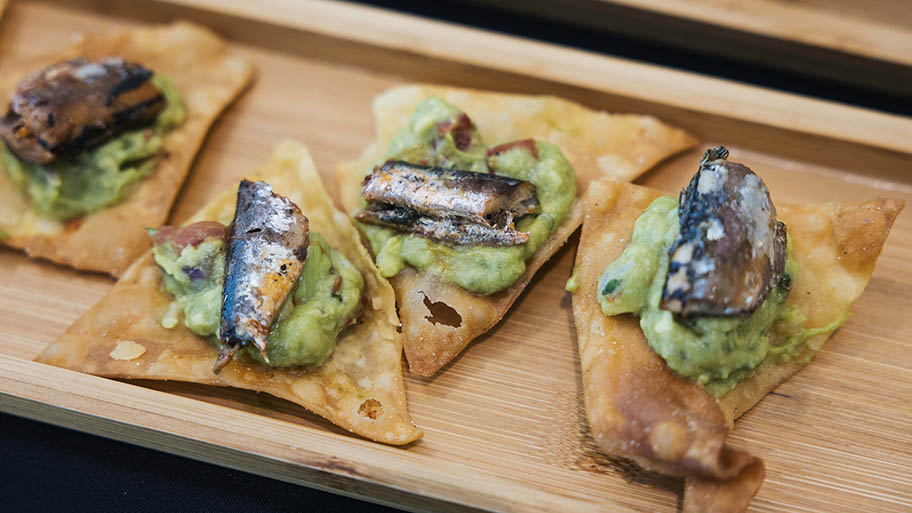 Sardine and guacamole tortillas © @DavidVVisuals
In marketing terms, sardines have been elevated from once being seen as a basic ingredient to a nutritious, gourmet choice.
Fernandes labels Iberian sardines "a superfood from the Atlantic". He adds: "They are good for your health and help gastronomy and tourism. It is a product that has economic, social, and cultural value. This [MSC] label implicitly provides added value, making it possible to further strengthen this history and culture."
“For sardine consumers, the Blue Label means the product is backed by a trusted network of professionals working to do things right.” Alberto Martín MSC Program Director for Spain and Portugal
Ongoing challenges
Sustainable management plans are in place to strengthen the long-term viability of sardines and ensure there is no lapse back to the barren period that followed the fishery's suspension in 2014. However, an industry dependent on nature will always face challenges. And marine heatwaves and climate change remain serious concerns today.
As a small pelagic fish that lives in midwater, sardines are significantly impacted by water temperature. "They have a short lifespan and are very sensitive and vulnerable to environmental conditions, such as the temperature and availability of food,” says Laura Wise. "Especially when they are in their first life stage."
A study shows that fish, including sardines, are moving from their traditional Mediterranean homes to the North and Baltic Seas as oceans warm. This will need to be monitored. Shifting ocean currents and warming waters will change the distribution of fish stocks and alter the structure of ecosystems.
Even with controls in place, fishing for sardines is unpredictable: "No two years are the same," says Santos. "This year has been a fantastic year for sardines, with good quality and size – it seems like they've come from heaven. Last year, though, there were a lot of sardines, but they were poorer quality."
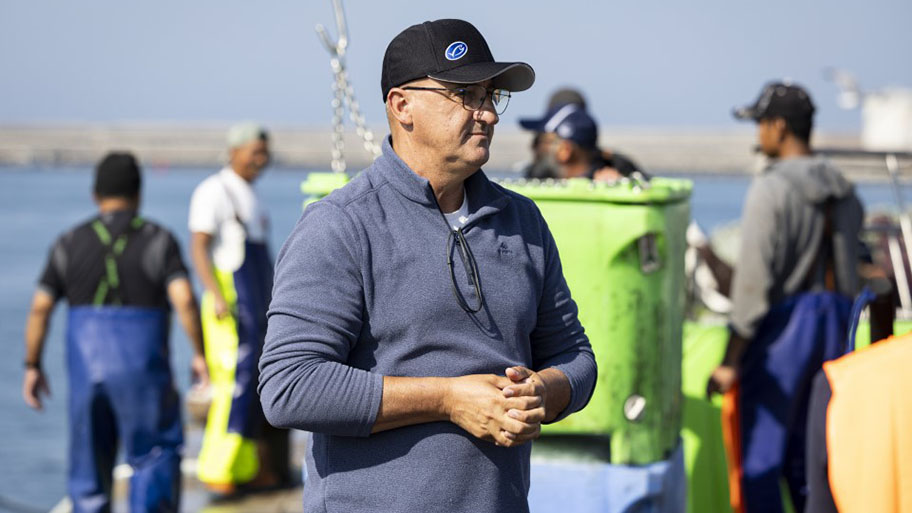 Francisco Santos, captain of the Vitória Coentrão © Flymedia
Toward a blue future
Through the collaborative efforts of fishers, producers, scientists, and government, Portugal hopes to ensure the survival of its cherished sardines for generations to come. A healthy stock ensures employment, instills pride, and supports local economic stability.
Thankfully, we turned the page and are now in a fantastic era, with steady work and good quality, certified sardines," says Santos. “Fishermen work differently now. They have a mindset that goes out to sea today thinking about tomorrow.”