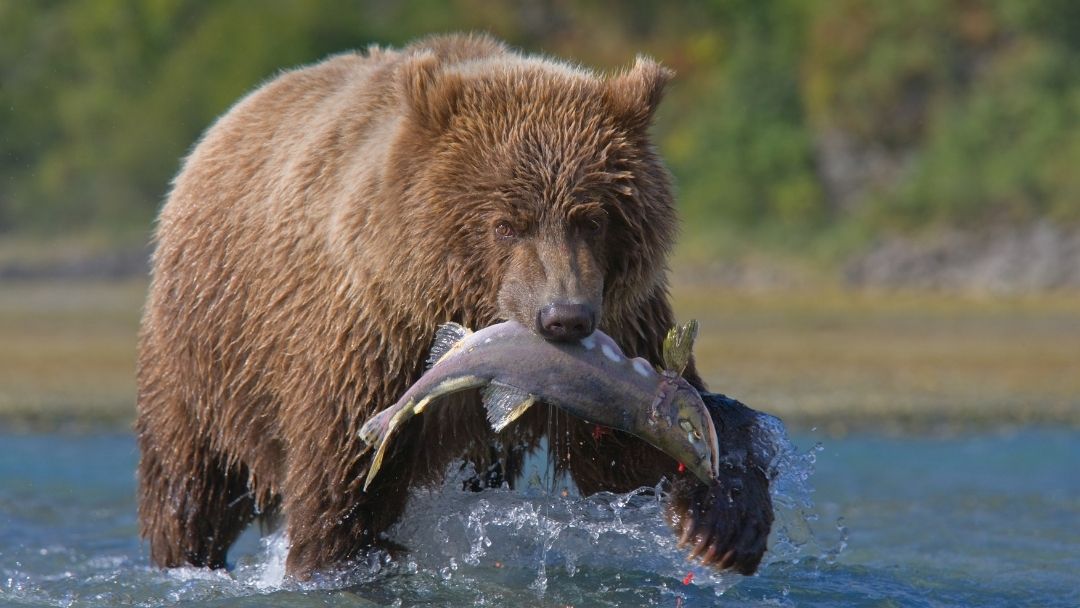
All of Katmai’s bears rely on abundant salmon populations and sustainable fisheries management.
Every September, people from 100+ countries will vote for their favorite, fattest bear. While all eyes are on the bears, we want to zoom out a little to the supporting crew. Because without salmon, there would be no fat bears.
Fat Bear Week is an annual celebration of the brown bears that live in Katmai National Park. The public votes in a bracket-style tournament to see which of sixteen of the chunkiest bears in Alaska will earn the title of Fat Bear Week Champion.
Without realizing it, when people vote for their favorite bear, they’re also celebrating something even bigger than the bear: a healthy salmon population.
What does Fat Bear Week really celebrate?
In the world of bears, the fatter the better. Packing on the pounds prepares them for a winter of hibernation. While they hibernate, bears can lose up to a third of their body weight, so the bigger they are when they start, the better off they’ll be.
One of their best sources for summer nutrition is salmon. You can watch the bears of Katami gorging on salmon all summer long on their explore.org cams here.
Salmon are the foundation of ecosystems
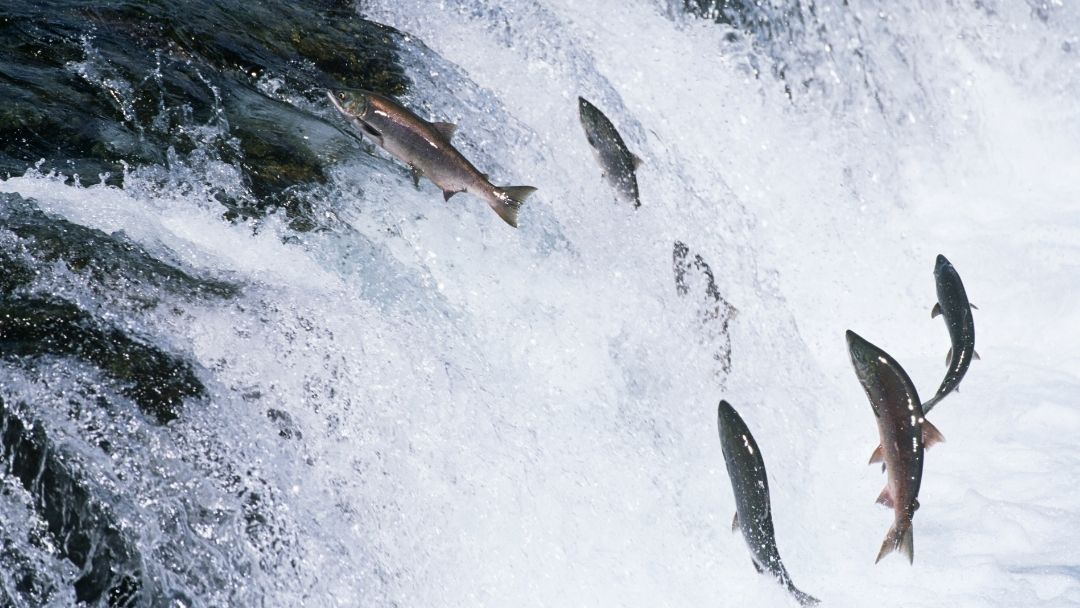
Salmon begin their lives in a freshwater environment, where they grow over a period of months to years. They eventually migrate to the sea, where they spend their adulthood. When it’s time for them to reproduce, they go back to the very same freshwater habitat where they were born to reproduce and eventually die.
This circular lifecycle helps entire ecosystems thrive. Not only are they food for predators, but they also cycle nutrients from ocean to stream. And when they die, they provide one final gift: their bodies fertilize the freshwater environment, supporting the health of old-growth forests in the process.
The surprising way bears help forests grow
Bears – like Katmai’s iconic brown bears – carry salmon into the forests. Uneaten or discarded carcasses decompose there and release nutrients the salmon have collected over their adulthood in the sea. These nutrients help support forest ecosystems. Research has even found these marine-derived nutrients in forest ecosystems near salmon streams.
So in addition to feeding other important species, from bears to bald eagles to otters, seals, and scavenging birds, salmon even help forests grow.
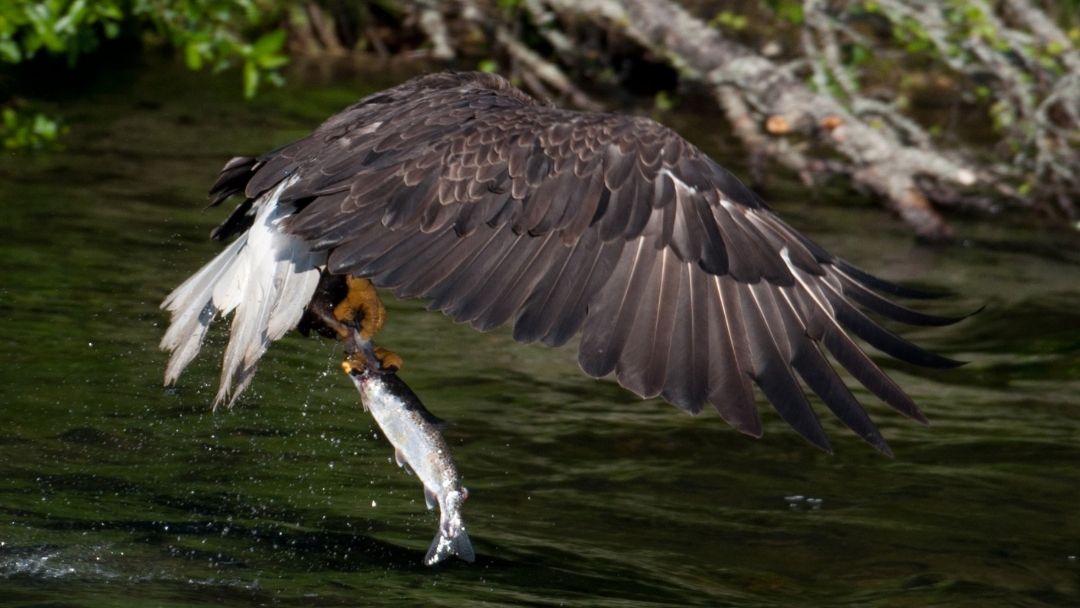
Sustainable fishing makes this cycle possible
Just like the bears of Katmai, humans love salmon. It’s a favorite among seafood eaters, landing in the number one or two spot of Americans’ favorite seafood every year. Because it’s so popular, how we fish for salmon matters.
Overfishing can alter the balance of an ecosystem and deplete important fish populations, endangering them over the long term, but salmon populations can be resilient if given the chance. A well-managed fishery ensures that commercial and recreational fishers can bring home a day’s catch while also leaving enough salmon to return to their natal spawning grounds to reproduce.
This is one of the many factors taken into account when a fishery achieves MSC certification. When you see the MSC’s blue fish label, it tells you that the salmon came from an environmentally sustainable wild-caught fishery.
The deeper meaning of Fat Bear Week
To be crowned champion, a Fat Bear needs healthy rivers, productive oceans, abundant salmon populations, and responsible fisheries management.
So while you’re voting this year, don’t forget to give a nod to the supporting cast: the salmon that make these bears competitors. And you can do your part to support a balanced ecosystem by shopping for certified sustainable seafood.