There have been fishers in skipper Adam Wiseman’s family for as long as any of them care to remember. “If you look at the family tree, pretty much every male on my dad’s side worked at sea,” he says.
.tmb-large1920.jpg?Status=Master&Culture=en-GB&sfvrsn=a5becf26_1)
Adam Wiseman, Artemis skipper
Originally, the Wiseman clan, growing up around Banff in Aberdeenshire, trawled for white fish and clams. The last two generations – Adam’s father Alex and his grandfather William before him - have honed their craft fishing for herring, the “silver darlings” and mainstay of North Sea fishing communities for decades.
While his predecessors caught herring in driftnets and salted them afterwards in wooden barrels, today, 35-year-old Wiseman, operates from a gleaming 75-metre steel trawler called Artemis. Wiseman uses a midwater pelagic trawl – a large cone shaped net - which is towed through the ocean in the middle of the water column. This means the seabed eco-system remains undisturbed. Sonar technology creates highly precise targeting to achieve the cleanest catch possible. A 2019 report looking at the Scottish Pelagic Sustainability Group’s (SPSG) total haul, showed a bycatch of a remarkable less than one percent.
“I absolutely love herring,” says Wiseman. “The smell and the taste of a kipper is incredible – that rich smokiness. Also, it’s not just incredibly affordable, it’s very high in Omega-3. From a pure health point of view, it’s as good a source of protein as chicken and lots of other meat.”
Artemis is moored at Peterhead, the largest fishing port in Europe, and trawls the waters from Orkney to Shetland and back again – a round trip of around 250 nautical miles. Every time Wiseman takes her out to sea he aims to come back with 500 tonnes of herring on board. He may be operating on an altogether larger scale than his forefathers, but he is one of those leading the way in fishing sustainably.
“We aim to fish for one day and then land the herring the following day to give the factory the freshest, best quality fish we can,” he says.
“Catching big volumes in a very short space of time means that our carbon footprint is extremely low.”
Skipper, the Artemis
.tmb-large1920.jpg?Status=Master&Culture=en-GB&sfvrsn=d4bec7de_1)
Wiseman is also part of a pioneering stock assessment programme which is setting great examples for the industry. From every haul, a basket of herring is sent to a lab in Aberdeen to be weighed and measured. This helps build up a sophisticated picture in terms of changes in the biomass of the herring stock, as well as the health and growth rate of the fish.
As well as this, Wiseman has been working closely with Steven Mackinson, Chief Scientific Officer for the Scottish Pelagic Fisherman’s Association. Together they have created a pilot study called ‘Catch to Batch’ which allows them to trace a single herring, from the point it is removed from the sea, right the way through to when it’s boxed up in the factory.
.tmb-large1920.jpg?Status=Master&Culture=en-GB&sfvrsn=b6fd4a43_1)
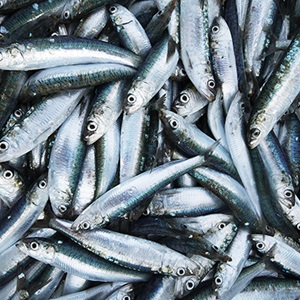
Herring being measured for data sampling
“We have managed to pull together a system where scientific data is being collected at every point on that journey. It’s pretty pioneering stuff.”
Chief Scientific Officer for the Scottish Pelagic Fisherman’s Association
7512e58091d84a05beb6a4245abcb933.tmb-banner.jpg?sfvrsn=40caafb6_0)
7512e58091d84a05beb6a4245abcb933.tmb-bannermob.jpg?sfvrsn=40caafb6_0)
52fcc51f399e4eb3abbaac3f4941e5a5.tmb-banner.jpg?sfvrsn=c7628b09_0)
52fcc51f399e4eb3abbaac3f4941e5a5.tmb-bannermob.jpg?sfvrsn=c7628b09_0)
-(1)92e91c20a3704a1ea817976b612cc9cf.tmb-banner.jpg?sfvrsn=a69956f1_2)
-(1)92e91c20a3704a1ea817976b612cc9cf.tmb-bannermob.jpg?sfvrsn=a69956f1_2)
92a4409f422c448696c2476e46a66207.tmb-banner.jpg?sfvrsn=9788041e_0)
92a4409f422c448696c2476e46a66207.tmb-bannermob.jpg?sfvrsn=9788041e_0)
-(1)a0d6f667cb4a499cac2c3fa1ba21afa8.tmb-banner.jpg?sfvrsn=549cbf53_0)
-(1)a0d6f667cb4a499cac2c3fa1ba21afa8.tmb-bannermob.jpg?sfvrsn=549cbf53_0)
812b78a4fd134b21908972ccffb9a21e.tmb-banner.jpg?sfvrsn=e38339b_0)
812b78a4fd134b21908972ccffb9a21e.tmb-bannermob.jpg?sfvrsn=e38339b_0)
It's hard to imagine the impact this must have had. From the late 1800s on herring was a key staple on dinner tables all over the UK – widely popular either served smoked as kippers or fried in oatmeal. This meant boom time for the herring industry, and entire Scottish coastal communities grew up and flourished on the back of them. Overnight, they had disappeared from the sea, the nets and were off the menu.
.tmb-large1920.jpg?Status=Master&Culture=en-GB&sfvrsn=92a7ce38_1)
Indeed, herring did make a remarkable recovery and since then quotas have been agreed and good management imposed. Although for many years following the collapse, herring remained out of fashion. Recently there are signs of a resurgence in sales and it’s been dubbed the “comeback kipper”.
CJ (aka Carol Jane Jackson) of Seafood by Design consultancy at Billingsgate fish market, explains.
“It takes just a short period of time when we are told not to eat something, and they are not readily available, that we move on to the next thing,” says Jackson, who has just published a book called The Great British Seafood Revival (Merlin Unwin). “I prefer herring to many other fish. It has a subtle flavour and there’s a creaminess to them which I love. Traditionally they are rolled in oatmeal, but just grilled, bones removed and served on buttered toast - you can’t beat it.”
“Now herring don’t show massive fluctuations in productivity, they are reasonably stable, ticking along rather than boom or bust,” says Mackinson. “This is thanks to responsible management and quotas in line with scientific advice.”
-(1).tmb-large1920.jpg?Status=Master&Culture=en-GB&sfvrsn=95484657_1)
Wiseman has fond memories of sharing herring on deck with the crew. “When we were pumping fish on board, my dad would nip down and get a few” he says. “The next thing you know he’d be up on the bridge with a plate of herring straight out of the sea, pan-fried in oatmeal. There’s nothing quite like it.”
Today there are twelve crew members on the Artemis. “Everybody is local, and with a lot of the crew there’s family connections. I've got uncles working for me, my brother-in-law worked for me, my father-in-law works for me. A lot of them were fisherman before they joined up with us. Pretty much with most of these boats when you get a job it’s a job for life. We try and look after our families as best we can.”
“People see us operating these big trawlers, but actually they are all just family businesses who have been working in Scotland for generations.”
Skipper, the Artemis
.tmb-large1920.jpg?Status=Master&Culture=en-GB&sfvrsn=58060d54_1)
“Our grandfathers have passed it down to their sons and their sons after them," concludes Wiseman. "All we’ve ever done is try to look after stocks as best we can. It’s the only way to ensure our children will have fish as well as jobs for the future.”
Images: Hannah Maule-ffinch/MSC
A small fish with a remarkable story
Since 2019, North Sea herring fishermen, processors and partners across the UK, Denmark, Sweden and the Netherlands have been working closely under one MSC certificate to ensure North Sea herring can continue to be enjoyed by seafood lovers for generations to come.
To mark the 20th anniversary of the first North Sea herring fishery achieving certification, this video celebrates the combined effort it takes to keep herring on our plates.