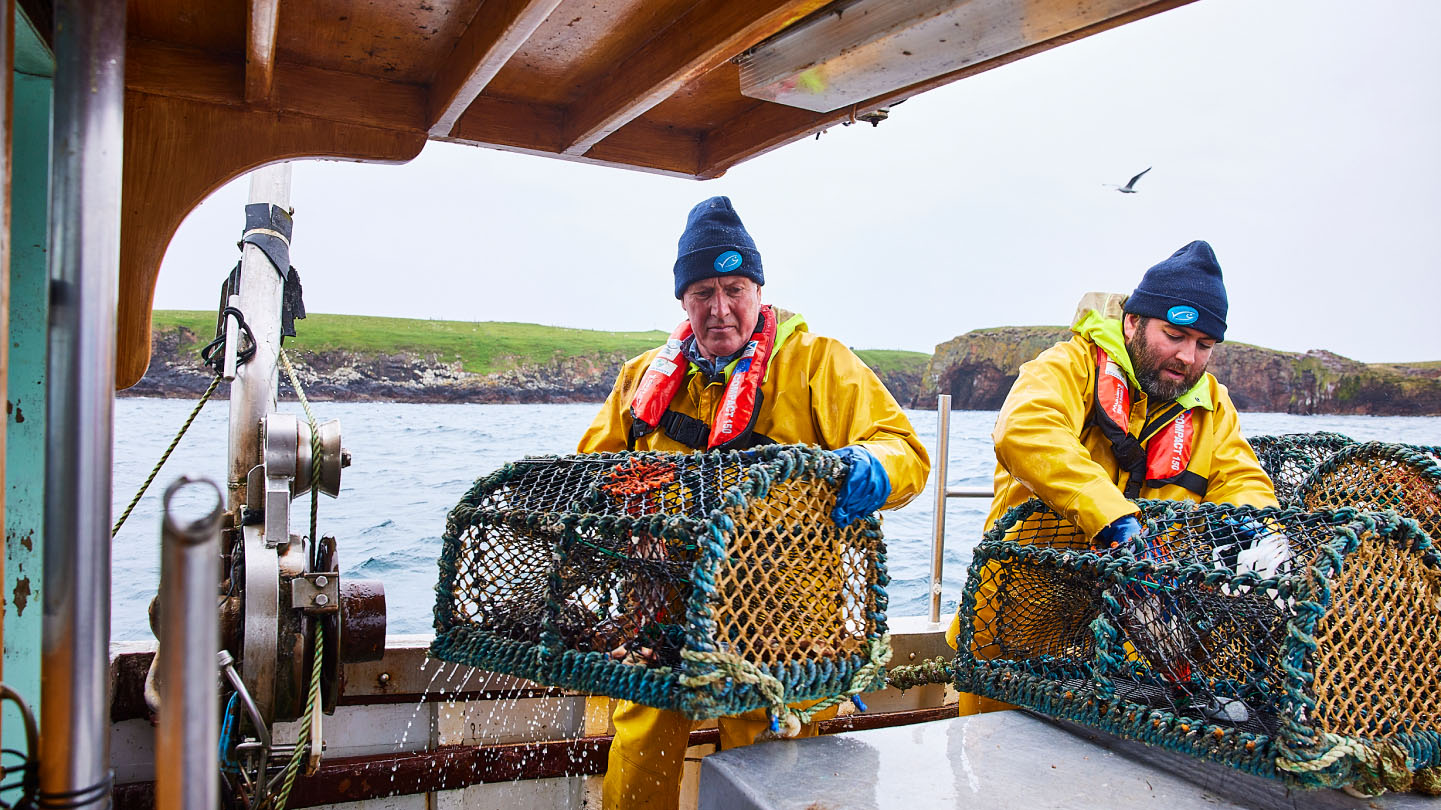
A Scottish fishery that plays a major part in sustaining a whole island community has been certified to the Marine Stewardship Council (MSC) Standard for sustainable fishing for a third time, securing a prosperous future for the shellfish fishermen of the Shetland Islands and the surrounding marine environment.
The good news about the Shetland Shellfish Management Organisation (SSMO) brown crab and scallop fishery’s MSC recertification extends to consumers too, as the scallops are widely available across the UK in branches of Waitrose and Whole Foods. The MSC is an international non-profit organisation which sets globally recognised, science-based standards for sustainable fishing. Its blue ecolabel is the world’s most recognised ecolabel for sustainable seafood.
The recertification represents the Shetland fishery’s ongoing commitment to fishing sustainably, implementing management practices that have established healthy stocks and seen the fleet of small, family-run boats, as well as the associated businesses, enjoy the benefits of a stable, thriving local fishing industry.
SSMO chair Alastair Cooper said: “We are relieved and delighted to make it through this testing process. Meeting MSC standards means we need to invest in good stock science and we achieve that through our partners at UHI Shetland and with invaluable support from Shetland Islands Council. We also have the most advanced protections for sensitive seabed habitats to be found anywhere in Scotland as well as a range of other conservation measures.”
He added: “Our scallop fleet is family-owned small dayboats landing the freshest scallops each evening from the same grounds they have fished for generations. The strong price and stable market arising from our MSC status helps keep the fishery viable in the face of rising costs.
“We can only hope that buyers will see the potential of our MSC brown crab – a niche product yet to be tapped into by the seafood trade.”
Landing creel-caught brown crab and dredge-caught scallops, this small-scale fishery consists of some 100 vessels that are mostly under 15 metres long and fish only in inshore waters, within six nautical miles of the coastline.
Through adopting sustainable practices such as rigorous management measures designed to preserve stocks for the future and protect the local marine environment, the fishery first achieved MSC certification in 2012. These measures include a custom-made harvest strategy to help manage the stock sustainably, as well as voluntarily signing up for the installation of remote electronic monitoring on all scallop vessels ahead of the mandatory requirement. Fishing restrictions, spatial closures, monitoring technology, and habitat mapping all help reduce the scallop dredge fishery’s impact on the seabed and a cetacean entanglement prevention guide means fishermen are well equipped if cetaceans (whales, dolphins and porpoises) interact with the creelers’ fishing gear.
The SSMO also continues to work in close partnership with the University of the Highlands and Islands, on Shetland, to assess the local stocks and the fishery’s impact on the local marine ecosystem.
By passing its reassessment, the SSMO has demonstrated that small-scale dredge and creel fisheries can meet the MSC’s high bar and utilise the Standard to demonstrate that they operate sustainably.
George Clark, Programme Director, MSC UK and Ireland, said: “The SSMO brown crab and scallop fishery has demonstrated what a small-scale fishery and island community can achieve with this phenomenal commitment to sustainability. Not only are they catching some of the UK’s most highly prized seafood, but they’re doing so with the condition of the seabed and other marine creatures at the forefront of their operations.
“Having visited the fishery myself in 2022, I’m thrilled to see those that work so hard to maintain this incredible example of a sustainable UK fishery be awarded a third successive MSC certificate, following a rigorous independent assessment.
“UK consumers having access to delicious, sustainable Shetland scallops from the likes of Waitrose and Whole Foods is fantastic, and hopefully we’ll see Shetland crab come into the UK market with news of another five years of certification for the fishery.”


