The food system — the way we grow, catch and eat food — has a major impact on both human and planetary health. Scientists and policymakers say we need to change the way we produce and consume food and move towards diets that are better for people and the planet. Fish and seafood are an important part of that shift, but they must come from sustainable sources.
Who is recommending fish and seafood?
Three major bodies of work now converge on the conclusion that fish, seafood and seaweed (aquatic foods) are essential to continued human and planetary health:
The EAT-Lancet Commission (2025)
70 experts from 16 countries, building on the influential 2019 report, published in The Lancet.
UN FAO Blue Transformation (2022)
The UN’s roadmap for growing aquatic food systems through a combination of fisheries management, sustainable aquaculture and reducing waste.
Blue Food Assessment (2021)
Over 100 researchers from 25 universities, the most comprehensive assessment of aquatic foods to date.
The need to balance human and environmental needs was the catalyst for the EAT-Lancet Commission – an effort to find a diet that provides enough food for everyone, with minimal harm to the planet. The Commission published a new report in 2025, which recommended a diet that includes fish alongside plant-based foods, and a reduced meat intake.
Why are fish and seafood recommended?
Why is a purely plant-based diet not recommended as the most beneficial for people and the planet?
Unique nutritional value
Seafood is a major source of protein for humans, but it offers further, unique, nutritional benefits.
Fish is the primary dietary source of Omega-3 fatty acids (DHA and EPA). High intake of Omega-3 is associated with reduced risk of heart disease. Low intake has been linked to slowed neurological development in childhood and may increase the risk of cognitive decline in adults.
Omega-3 fatty acids cannot be produced by the human body on its own and they are not abundant in the land-based meats we consume. Eating fish is the most reliable way to access their benefits.
Fish is also rich in vitamin B12, vitamin A, iodine, iron, zinc and calcium. Nutrients from seafood are better absorbed by the body than those from vegetables or supplements, helping to deliver more nutrition per serving.
Environmental benefits
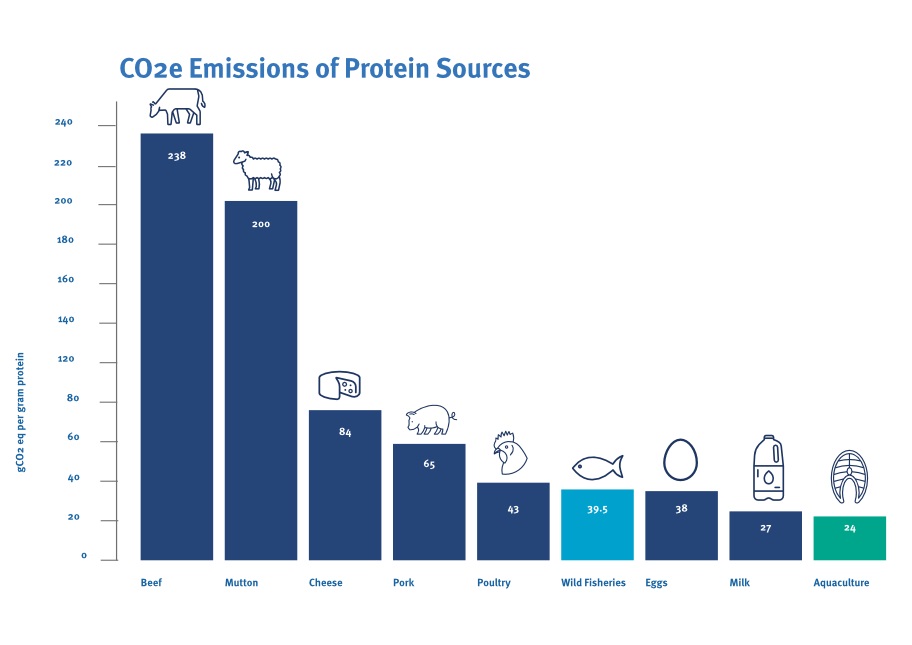
All food production affects nature, but fish and seafood generate lower carbon emissions than other animal proteins.
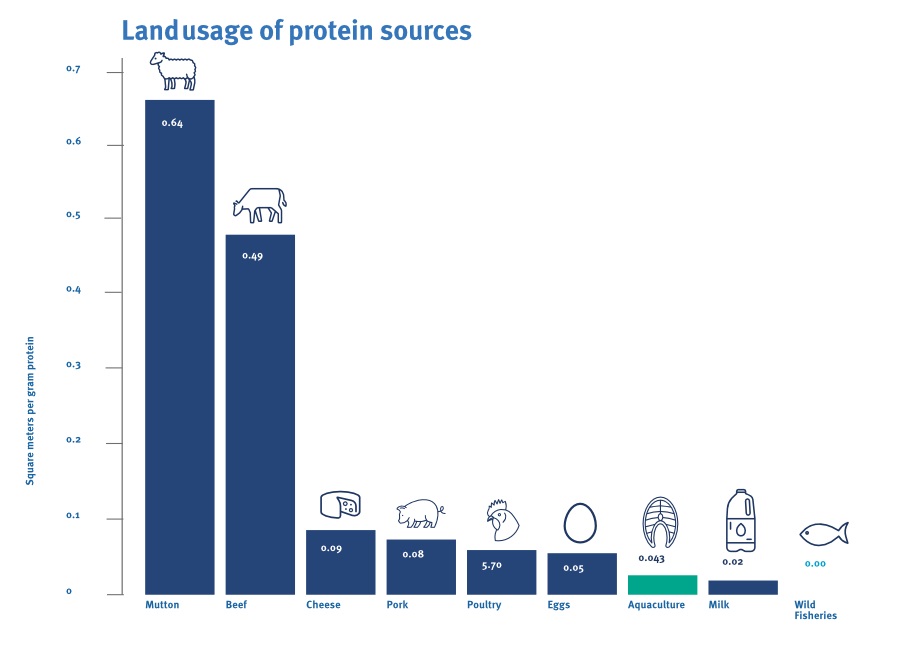
Seafood production also requires less land. Wild-capture seafood requires no land at all and no freshwater, fertilisers or feed. The carbon footprint of wild fisheries is a fraction of that of red meat.
For a planet under pressure, this matters.
Should we eat more fish?
Not necessarily. The Planetary Health Diet recommends eating at least 30g of fish per day, or roughly two 100g servings per week. This echoes what many governments already promote. An MSC review of government nutritional strategies showed that two portions per week is the most common recommendation.
However, many people are not eating enough fish and seafood. MSC research conducted with independent consultancy GlobeScan found that only 19% of consumers said they were meeting the two-portion target. In some countries, the figure was as low as 7%.
Will fish production go up?
The EAT-Lancet Commission says if its diet is followed, global fish production will need to increase by 46% of 2020 levels by 2050, to keep up with population growth. Production of other animal-based foods like beef, lamb, pork, dairy and chicken, would need to decrease, as their environmental impact is much greater.
Both EAT-Lancet and the UN FAO expect much of the growth to come from sustainable aquaculture (farmed fish). But wild caught fish – which currently makes up around half of what the world consumes – will continue to be a vital source of nutritious, environmentally friendly food, particularly in the global south and coastal communities.
The relationship between farmed and wild fisheries must also be carefully managed: much of the feed for farms comes from wild caught fish.
How can this shift in production and diet work?
If the EAT Lancet scientists are right, and fish and seafood are a vital part of a diet that is better for people and planet, then fishing sustainably will be more important than ever.
Fish stocks can stay healthy and provide seafood long-term, if they're managed carefully.
Many fish stocks that were once overfished have been rebuilt through science-based management. Fishing operations that target these stocks are now certified to the MSC Fisheries Standard.
The UN suggests that 98% of currently overfished stocks could recover by mid-century with the right governance.
Our analysis suggests 16 million tonnes more seafood could be produced every year if all fisheries worked sustainably.
This additional catch could make a real difference to global nutrition. It could prevent iron deficiencies in 4 million people, calcium deficiencies in 24 million people, and provide enough omega-3 fatty acids to meet the daily requirements of 38 million people.
In total, sustainable fishing could feed an additional 72 million people annually.
What can we do to help?
Sustainable fishing is an attainable goal. It requires collective action from governments, industry and fisheries, and it is supported by growing public demand.
Governments and policymakers
Integrate sustainable management of fisheries into national nutrition, food security, climate change and biodiversity strategies.
Seafood industry
Commit to sustainable sourcing using credible science-based tools such as the MSC Fisheries Standard.
Fisheries and fish farms
Work towards meeting independent standards for sustainable fishing such as the MSC and ASC standards.
General public
Seek out sustainable sources of fish and seafood using reliable science-based certification schemes and ratings as a guide.