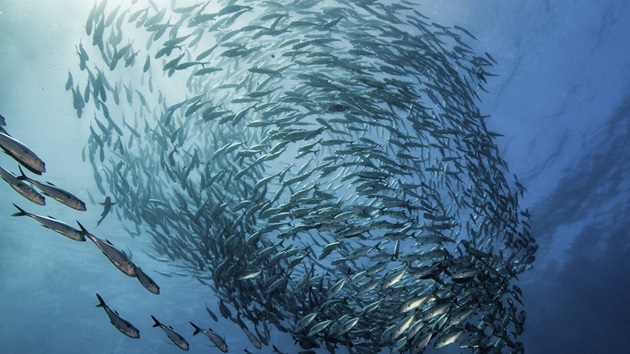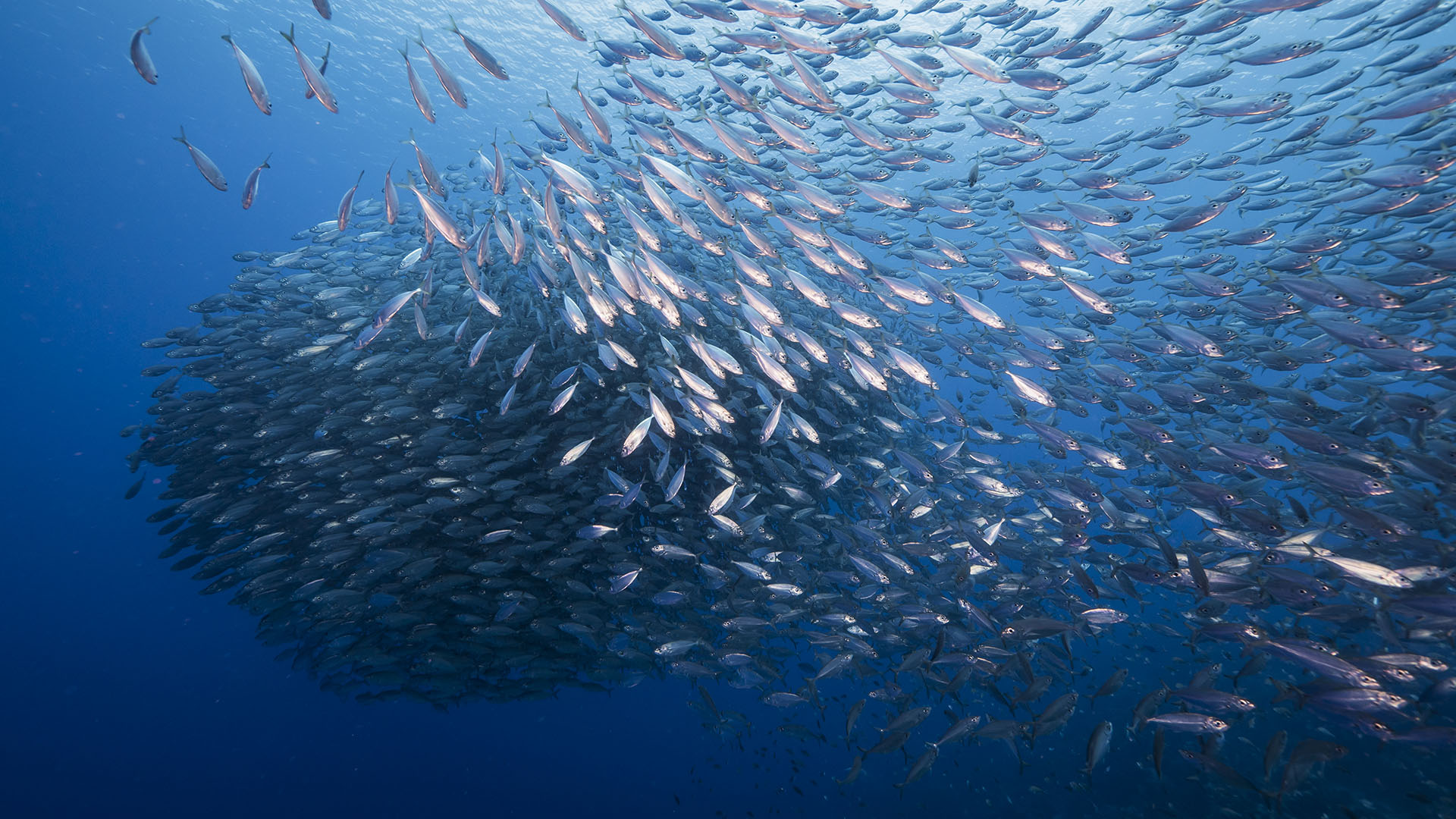
The United Nation’s Food and Agriculture Organization (FAO) has published its State of World Fisheries and Aquaculture 2026 report. This flagship publication takes a deeper dive than previous reports into the latest data on overfishing, sustainable management and the vital role of aquatic animals as a source of healthy food and jobs.
It reveals a stark gap between fisheries that are well managed and have healthy stocks, and those that are not. Clear proof that sustainable management works but is not being universally applied.
We’ve unpacked five of the core messages for you from the comprehensive 2026 report.
1. The challenge of overfishing is not going away (but it’s not all bad news)
Overfishing has increased and remains a serious problem. The share of stocks classified as biologically sustainable in this report declined by just over 2 percentage points to 62.4% from 64.5% in the previous report two years ago.
The report’s figures are consistent with long-term trends and partly reflect the FAO’s methodological updates and inclusion of new fish stocks.
Importantly, by catch volume, 72.6% of landings originate from biologically sustainable stocks. This fraction is greater than the 62.4%, which is based on the number of stocks. The difference indicates that larger and more productive stocks tend to be better managed and sustainably fished.
Rupert Howes, Chief Executive of the MSC, says: “Encouragingly, despite the rise in overfished stocks, almost three-quarters of global fish landings already come from well-managed, sustainable stocks – a powerful demonstration of what responsible fisheries management can achieve at scale.”
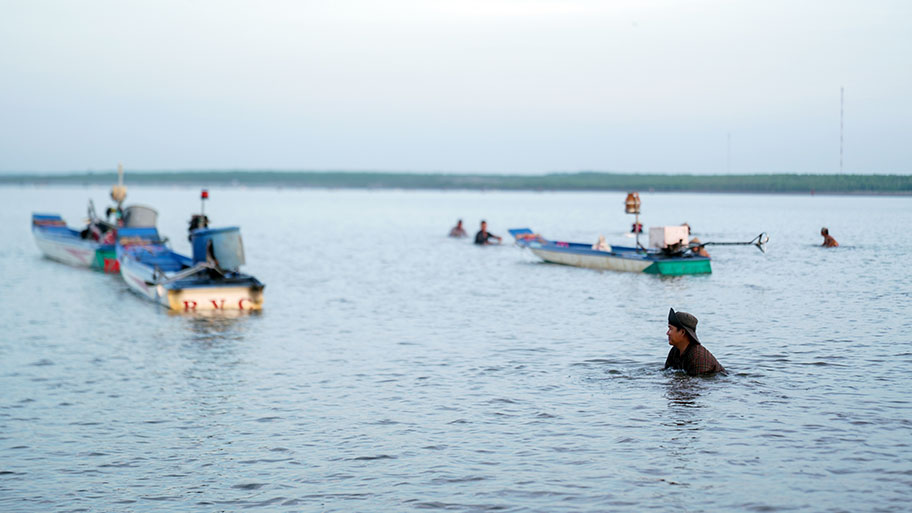 Clam fishers in Ben Tre, Vietnam
2. Science-based sustainable management systems yield results
The report observed differences between regions and species groups in the proportion of stocks classified as biologically sustainable. These variations reflect the extent to which science-based management systems and harvest strategies have been implemented.
Regions or species groups that tend to have fewer stocks classified as biologically sustainable also tend to have higher levels of fishing pressure and more limited management capacity.
"This is consistent with longstanding conclusions in fisheries science that effective fisheries management tends to result in favourable stock status levels, or recovery of stocks towards more favourable levels,” says Michael Melnychuk, Principal Scientist (Data Science) at the MSC.
In the Antarctic Areas, for example, all 15 monitored stocks are considered biologically sustainable. Meanwhile, the Mediterranean and Black Sea had the lowest proportion of stocks considered biologically sustainable (58 of 127 stocks, 45.7%). The report indicates that sustainability outcomes are linked to improved management practices.
Michael Marriott, MSC Program Director for AMESA (Africa, Middle East and South Asia) adds: “When fisheries are well managed, they have healthier stocks, but when management is lacking, stocks suffer. The data shows us that sustainable management works but is not being universally applied.”
3. Seafood is catching up with meat and increasingly has a key role to play in global human nutrition
The world has never produced more aquatic foods. In 2024:
- Fisheries and aquaculture produced 235 million tonnes of aquatic animals, such as fish, molluscs and crustaceans.
- These foods now provide at least one-fifth of the animal protein consumption of 3.1 billion people.
- The global trade in aquatic animal products was valued at $184 billion, rivalling the terrestrial meat trade
“Global fisheries and aquaculture production is at a record high but ensuring sustainable and equitable growth remains a major challenge.” FAO State of Fisheries and Aquaculture Report 2026.
Ib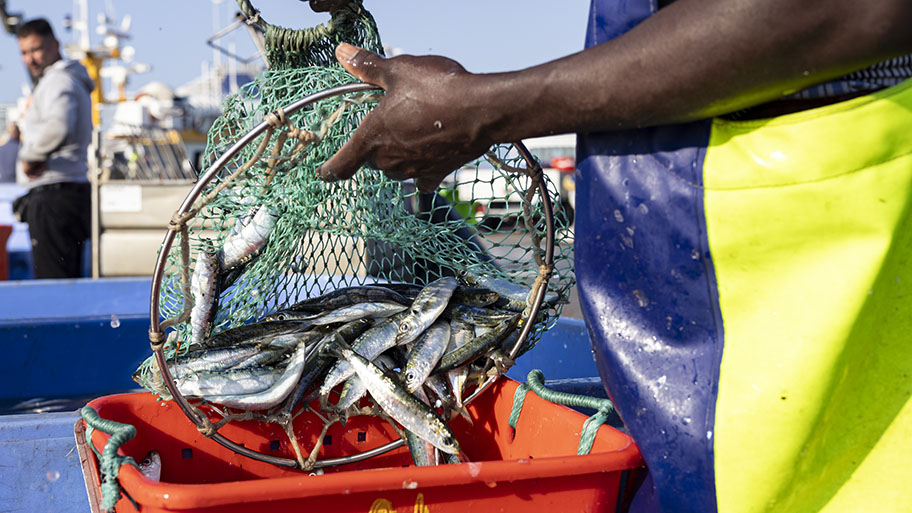 Iberian sardine fisher unloading catch
Yet unlike meat production, wild fisheries cannot simply expand to meet growing demand. With capture fisheries production of aquatic animals largely stable for decades – it has oscillated since the late 1980s between 86 and 94 million tonnes – future growth will depend on keeping fish stocks healthy, reducing illegal, unreported and unregulated fishing, and scaling up aquaculture in ways that are environmentally and socially responsible.
Together, wild capture fisheries and aquaculture are integral to global food security and play an important role in meeting a growing population’s nutritional needs. The report states: “Aquatic foods make an ever-increasing critical contribution to human nutrition, providing essential micronutrients, omega-3 fatty acids and high-quality proteins that support healthy diets.”
This supports findings from several major recent studies that identify aquatic foods as essential to human health and the health of the planet.
Protecting aquatic food resources is vital for both food security and the livelihoods of more than 600 million people who depend on them, particularly in coastal areas and developing regions.
4. Stock status of tunas globally continues to be a bright spot
Just over 91% of assessed tuna stocks were classified as biologically sustainable, an increase since the previous report, and more than 99% of their combined landings originated from biologically sustainable stocks.
The report highlights the concerted global efforts of tuna Regional Fisheries Management Organisations (RFMOs) “to apply precautionary management approaches, with positive outcomes” – no easy task, as highly migratory tuna stocks frequently shift between national jurisdictions.
“This effective management is leading to improved stock status resulting in sustainable global catches from healthy stocks,” says Bill Holden, Senior Tuna Fisheries Outreach Manager at the MSC. “The main commercial tuna stocks have been prioritised by these RFMOs for developing Management Procedures (MPs), but we are also seeing management measures being developed for other species such as billfish and sharks.”
However, the report adds: “Many small tuna stocks remain severely data-limited, which presents significant challenges for assessment and effective management by tuna RFMOs."
According to Manuel Barange, Assistant Director-General of the UN Food and Agriculture Organization (FAO): “Extending this level of performance to smaller fisheries, where management costs can be proportionally higher and economic returns much lower, requires innovative and less costly approaches, including co-management solutions.”
With improved management globally, particularly in regions with limited capacity currently, capture fisheries could be expected to deliver slightly more wild fishery production (from 92 to 95 million tonnes).
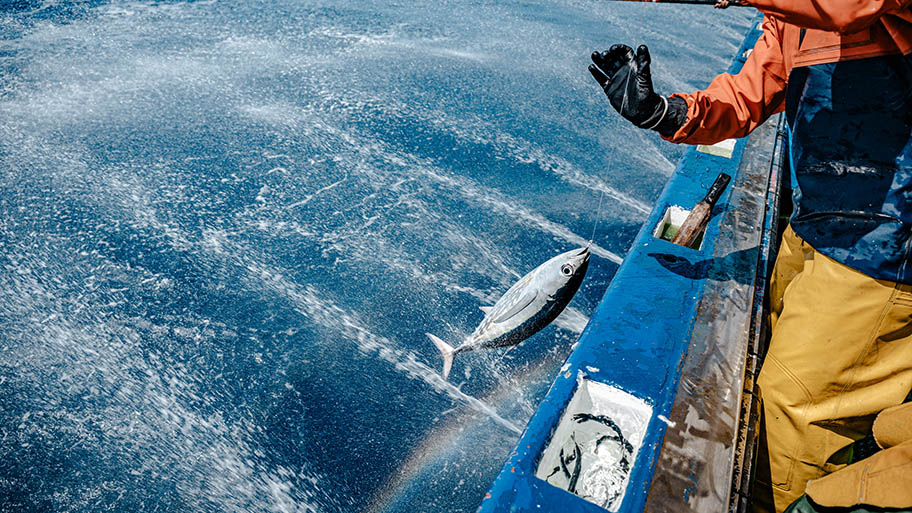 Albacore tuna being caught with pole and line
5. The importance of managing unknown climate scenarios
Despite the uncertainty of climate risks, worldwide studies on the impacts of climate change on aquatic systems highlight the relevance of adaptation measures. These reports urge decision-makers to integrate climate change considerations into planning and management.
For fisheries, the challenge is not only ecological but also practical, including increasingly managing fish populations that are on the move. Changes in ocean temperature may be associated with shifts in productivity, spatial distribution and abundance of marine species. Under high emissions scenarios, exploitable marine fish biomass is projected to decline by over 10% by 2050 in several regions. These changes risk undermining management efforts, particularly where stocks cross jurisdictional boundaries or enter unregulated areas.
Manuel Barange believes the need for adaptive management is clear: “Climate change is already having an impact on marine ecosystems, shifting species distributions and introducing uncertainties in stock dynamics.”
Regional fishery bodies such as RFMOs, which bring countries together to manage shared stocks, promote co-operation and science-based decision making, will have a key role to play. They can help manage these risks through joint research, data sharing, and adaptive, precautionary approaches that enhance fisheries’ resilience.
The report states: “The sustainability of fisheries in the future will be the result of management action setting adequate exploitation levels that take into account changes in productivity and distribution of stocks. Global models show that if fishing pressure is reduced and stocks are allowed to rebuild, biomass losses under warming scenarios can be partially offset, particularly under low emissions pathways.”