


A novel quota system that integrates seven commercial groundfish fisheries has enabled harvesters to fish smarter, not faster, and helped secure the future of MSC-certified halibut in British Columbia.
Fishery
Pacific hook and line halibut fishery and sablefish caught by licensed commercial halibut vessels
Location
British Columbia, Canada
Status
MSC certified since September 2009
'Derby-style' competition
In the 1980s, fishing seasons for groundfish such as halibut, lingcod and sablefish in the Pacific Northwest were extremely short and dangerous. Driven by a 'race to fish' dynamic, hundreds of vessels charged to catch fish during brief openings creating intense fishing pressure, excessive waste and serious management challenges.
This crisis had inadvertently arisen when Canada’s Department of Fisheries and Oceans (DFO) attempted to control fishing effort and harvest by using season length reductions. In the 1980s, the DFO set a total allowable catch (TAC) for multiple groundfish species mandating that the fishery would close once that total was reached. Unfortunately, as is the case in many fisheries around the world, the measure backfired.
Rather than improving management, it led to 'derby style' competition where individual vessels would rush to gain as large a share of the catch as possible. Under such frenzied conditions, the TAC was frequently exceeded between 1980-90, putting the long-term health of the stocks at risk.
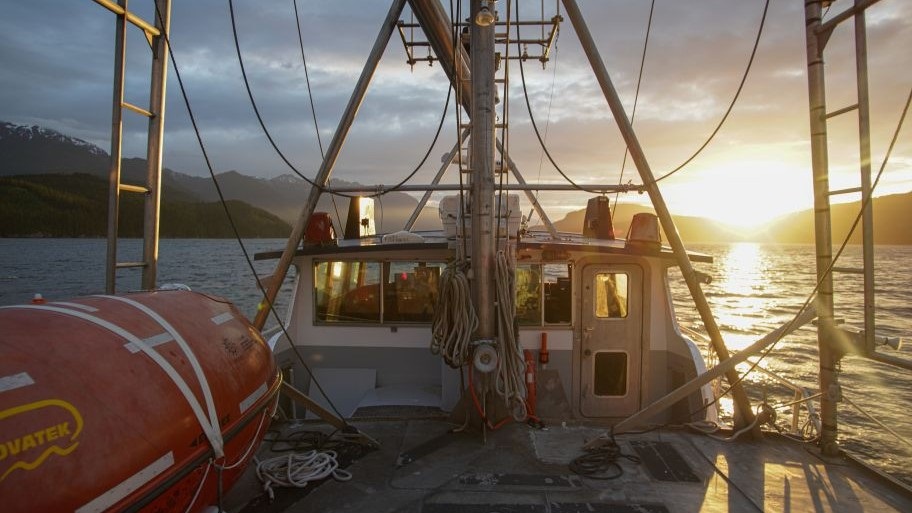
Halibut fishing vessel at sunset ©Tiare Boyes
Effective new measures
Concerned about the long-term sustainability and economic viability, halibut vessel owners approached the DFO to develop new and more effective management measures.
This led to the implementation of an Individual Vessel Quota (IVQ) program in 1991, which was then adopted across the other groundfish fisheries in British Columbia. The IVQ system provides each vessel with a share of the total allowable catch, which can be taken at any time during a much longer season, eliminating the destructive “race to fish”.
Individual responsibility
A further management change was introduced in 2006, which requires halibut vessels to be accountable for not just their target catch but all other groundfish catch. This applies regardless of whether the non-target species are retained or discarded. For example, any lingcod or sablefish caught by a halibut vessel would need to be covered by quota from those fisheries and vice versa.
Because the quotas are transferable, fishers can temporarily or permanently reallocate their quota between vessels or different fisheries, allowing them to plan their operations over an extended season.
Flexibility is built-in: halibut harvesters, for example, can carry over up to 10% of unused quota, while any excess catch is deducted from the vessel’s quota in the following year.
“Today, the fishery has 100% at-sea monitoring of all the catch and 100% dockside monitoring of all fish landed; catch limits for halibut and non-target species are never exceeded.”
Executive Manager, Pacific Halibut Management Association of BC
Read our full report
Find out more
Safeguarding scallops with annual surveys
The early warning system protecting sardines
