I love tuna. Fresh, tinned or frozen – bring it on. But is it just me or does anyone else feel a bit overwhelmed by the different species and cuts on offer when buying this deliciously versatile fish? What’s more, a voice at the back of my head wants to know if I’m making an environmentally sound choice.
Unlike wine, cheese and beef, say – for which we have rich vocabularies – common knowledge of different varieties of tuna, their tastes, textures and optimal pairings is the exclusive preserve of specialist chefs and pescatarian gourmands. The differences can be subtle between tuna species and their shifting sustainability status, so here’s a guide to help you go that extra mile and know your yellowfin from your albacore or a $1 tin of skipjack from wallet-busting cuts in restaurants and sashimi joints.
Skipjack
Provenance: Caught in the tropical waters of the Pacific, Atlantic and Indian Oceans. The 'tiddler' of the commercial tuna species is also the most abundant. Skipjack, which as its name suggests, like to leap across the ocean surface, and represent 58 per cent of the world’s tuna catch.
If you’re eating tuna as a store-cupboard staple then there’s a good bet it’s skipjack. Often labelled 'Chunk Light' in America, it is not technically considered a ‘true’ member of the Thunnus tribe and upmarket chefs give it a wide berth. That said, its small, tender chunks are perfect for canning and its darker flaky meat has a distinct, strong fish flavour. This makes it a superb pop-top standby for everything from packed lunches and pasta dishes to quick salads and camping trips. Skipjack is the only one of these tunas not commonly eaten raw as sushi.
Try skipjack in cheesy tuna and spring onion melts, pan-fried tuna and parsley patties or in a creamy mayo and lemon based tuna sauce (tonnato) as a dip for raw or charred vegetables.
Skipjack stocks are healthy in all ocean regions and, at the time of writing, no overfishing is occurring. You will find FAD-free, pole-and-line or purse-seine caught skipjack tuna available in stores. FADs or fish aggregating devices are man-made floats used to attract tuna; purse seine fishing, which represents 66 per cent of global tuna catches, sets a net around a school of tuna and then pulls it closed like a purse. All of these fishing techniques face challenges when it comes to sustainability, but these can be overcome with careful management and by adapting fishing gear. MSC certified skipjack is, of course, from sustainable sources.
Albacore
Provenance: It is typically caught in deeper waters, around 400m deep and is found in the Pacific, Indian and Atlantic Oceans, the Mediterranean and even in UK waters. Albacore represent just 5 per cent of the world’s tuna catch.
Deli favourite Albacore is a light-fleshed tuna increasingly found in attractively labelled jars and retro tins with extra virgin olive oil. It comes in larger chunks than skipjack, has a subtle, delicate flavour and drier, meaty texture. It is extremely popular in US grocery stores where it is known as both ‘white tuna’ and ‘chicken of the sea’ – the latter is an old fishermen’s term derived from its light appearance and mild flavour. Be warned: when you see a menu that offers ‘white tuna’ and not ‘albacore’ it could well be an inferior substitute for albacore such as oilfish, butterfish or escolar.
Albacore is commonly known as Bonito del Norte in Portugal and Spain where in the north it is served as tapa or ‘pintxo’ in stuffed piquillo peppers mixed with a little mayonnaise, finely diced onion and a generous squeeze of lemon juice. King of the cans is ‘Ventresca de Bonito’ – oil-rich belly fillets of albacore which have been carefully cooked in open cauldrons to yield a soft texture and a depth of flavour enhanced by the fish’s appetite for anchovies. The good news is it’s available in MSC certified tins in some supermarkets and stores. Due to its higher fat content than skipjack and the fact its meat holds together nicely, albacore is also sold as fresh and frozen steak. It is great, lightly grilled for a classic Salade Nicoise, on a crushed olive and fava bean crostini or in a Sicilian-style linguine dish with capers and raisins.
Yellowfin
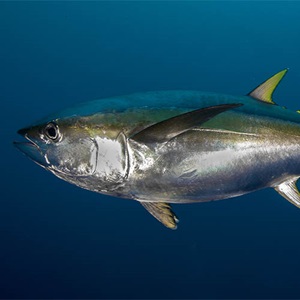
Provenance: Found throughout the Pacific, Indian and Atlantic Oceans, yellowfin represent 29 per cent of the world’s tuna catch.
More than three quarters of the world’s tuna catch is consumed in Japan and the most widely served tuna in its 30,000 sushi bars is yellowfin. It is also the tuna most commonly served raw or cooked in European restaurants and the best-selling or most widely consumed MSC-certified tuna in the US. Ruddy coloured, leaner and more affordable than bigeye or bluefin, it appears on menus as sashimi and nigri or lightly seared in tekkamaki rolls.
Its firm flesh works well grilled, or seared rare to medium-rare. A flash-in-the-pan light touch is key with tuna – overcook it and you might as well be eating cardboard. Yellowfin’s medium-to-mild flavour also makes it an ideal candidate to be marinated – try it cubed and soaked in soy sauce, sesame oil and ginger then served with avocado, edamame and rice in a bright and healthy Hawaiian poke bowl.
Tuna tutorial: Tuna can earn one of four grades according to its freshness, size and shape, colour, texture and fat content. Grade No. 1 (‘sashimi-grade’ or ‘sushi grade’) is the best with visible marbled fat and the highest fat content. Grade No. 2+ is excellent quality, perhaps from smaller fish with a few imperfections. Grade No. 2 is ‘grill-grade’ mainly used cooked in restaurants and raw in some lower-end sushi bars. Grade 3 has already turned brown or greenish and is used for cooking.
Bigeye
Provenance: Found in the Indian, Pacific and Atlantic Oceans, bigeye represents 8 per cent of the world’s tuna catch.
Bigeye has fattier flesh than yellowfin with marbling near the skin and a more pronounced richer flavour. Bright red and firm it makes excellent sashimi and meaty steaks. It is one of the two species known as ‘ahi’, along with yellowfin. Try soy and sesame crusted bigeye with a ginger dressing, grilled spicy mango and bigeye skewers, or rapidly sear it in a griddle pan and serve with a lustrous caponata.
Three of the world’s bigeye tuna stocks are in good health, but the Atlantic is overfished. To be sure that you’re eating sustainable bigeye, look for the blue MSC label.
Tuna tutorial: Tuna’s natural redness comes from myoglobin, a protein which stores and processes oxygen. Fresh tuna turns brown within hours but this doesn’t affect the taste.
Bluefin
Provenance: There are three bluefin species in four stocks: Western Atlantic, Eastern Atlantic and Mediterranean, Pacific and Southern. They represent just 1 per cent of the world’s tuna catch.
Bluefin is the
kingpin of the tuna family renowned for fetching six-figure sums from exclusive restaurateurs at Tokyo's famous Tsukiji fish market. It has a history of severe overfishing, has been removed from most restaurant menus in North America and Europe and
is only really found at high-end sushi restaurants. Thanks to international efforts, however, there are signs of recovery within one bluefin stock in the North East Atlantic, giving hope that the fate of this much valued fish can be
turned around.
Whether you’re choosing fresh, frozen or tinned, buying sustainable tuna can be a tricky business. There are lots of labels out there competing for the consumer’s attention. Dolphin-safe labels, for example, focus
only on the impact of fishing on dolphins and don’t take overall sustainability into account. The best way to significantly reduce exposure to risks such as overfishing, the problem of bycatch, mislabelling and illegal, unreported and unregulated
fishing is to choose the distinctive blue label of MSC certified tuna.
Nick Wyke is a journalist and food writer who is passionate about local, seasonal and sustainable produce.
Tuna recipes
Ingredients
Method
- 200 g MSC certified albacore tuna fillet, minced as for tartare
- 1 tsp chilli powder
- 1 lemon, juice and zest
- 4 stems parsley, leaves finely chopped
- 1 spring onion, minced
- 1 tbsp mayonnaise
- 1 egg
- 3 tbsp panko bread crumbs
- 1 avocado
- ¼ white onion, minced
- Olive oil
- 4 tbsp mayonnaise
- Flour for sprinkling
- 1 burger bun, halved, toasted if desired
- 2 heads of little gem lettuce, leaves separated
- ½ red onion, in rings
- 1 tomato, sliced
- Oil for frying
- Salt and pepper
- Mix the tuna with the chilli powder, juice of a quarter lemon, parsley, spring onion and mayonnaise. Now mix in the egg and the panko crumbs. Shape the mixture into two burgers about 1½ cm thick. If the mixture feels too wet, add more panko.
- Chill the burgers in the fridge for 20 minutes to firm up.
- Remove the flesh from the avocado and mash with a fork. Now combine with the white onion and season with the juice of a quarter lemon, a splash of olive oil, salt and pepper. Set the avocado mixture aside.
- Mix the mayonnaise with the juice and zest of half a lemon. Set the lemon mayonnaise aside.
- Remove the burgers from the fridge and briefly dredge both sides in flour. Knock off any excess flour. In a frying pan, heat two tablespoons of oil over medium heat. Fry the tuna burgers on both sides for 3-4 minutes until nicely browned.
- Spread the bottom half of the bun with lemon mayonnaise. Add some lettuce leaves. Spoon the guacamole over the lettuce and add the burger. Top the burger with tomato and red onion. Finally, spread the bottom of the top half of the bun with lemon mayonnaise and place on top.